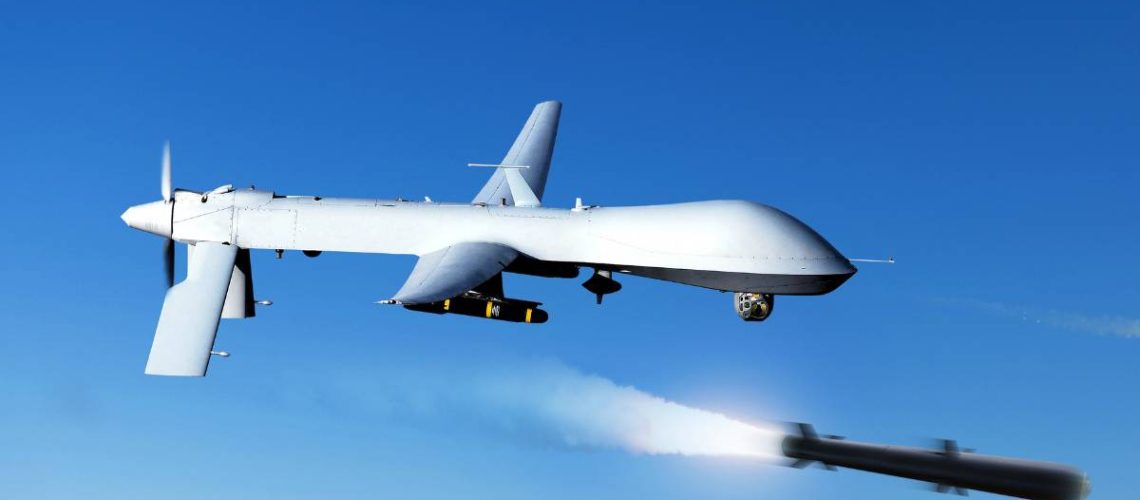

A loud blast, sirens, rapid aircraft launches — and then the most dangerous part: uncertainty. Reports from Cyprus-based outlets indicate that RAF Akrotiri was struck by a small drone, causing minor damage and no casualties, while local residents described panic, continuous sirens, and immediate aircraft activity.
This is not an isolated incident. It is a strategic message — and Cyprus must read it with clarity.
What the Akrotiri strike means
If a drone can impact a major UK base on Cyprus at a time of accelerating confrontation between Israel, the United States, and Iran, the takeaway is direct.
First, deterrence has shifted from declarations to disruption. Iran and aligned actors cannot always outmatch Western firepower symmetrically. They can, however, raise operational and political costs through calibrated, deniable, and limited strikes that test thresholds without immediately triggering full escalation.
Second, Cyprus is now part of the operational geography of the conflict. Akrotiri’s role as an enabling platform makes it both a practical node and a symbolic target. The strategic effect remains the same: pressure on basing, tempo, and political cohesion.
Third, the Eastern Mediterranean and the Gulf are now a connected theatre. Maritime disruption in the Strait of Hormuz and drone activity in the Eastern Mediterranean are components of a single pressure architecture designed to stretch Western response capacity.
The real center of gravity is Hormuz.
Strategists must look beyond headlines and watch choke points. Shipping data indicate significant tanker anchoring near the Strait of Hormuz amid rising tensions. Damage to tankers, risk of mines, drone threats, and increasing war-risk insurance premiums signal deliberate economic leverage.
Iran does not need to win a conventional war to impose global cost. It only needs to create uncertainty in maritime flow. Perception alone can slow shipping, elevate prices, and create cascading economic stress.
This economic dimension must not be underestimated. Energy volatility feeds inflation, weakens fragile economies, and places political pressure on European governments already managing social fatigue from successive crises. A prolonged disruption would not only affect oil and LNG flows but also insurance markets, freight logistics, and investor confidence across the Mediterranean basin.
At the same time, nuclear verification tensions are rising. Concerns regarding inspection access and enriched material storage increase strategic anxiety. When verification contracts and military activity expands, diplomacy becomes a race against miscalculation.
“A base does not need to be destroyed to be neutralized; it only needs to become politically expensive.”
What happens next
The next weeks will likely be defined by three trajectories: managed escalation, Hormuz shock, or political rupture and spillover.
In a managed escalation scenario, both sides test limits while avoiding total war. This produces recurring tactical shocks without strategic resolution. In a Hormuz shock scenario, even a temporary maritime freeze would trigger immediate price spikes and emergency coordination among major economies. In a rupture scenario, regional proxies expand the battlefield, increasing the probability of miscalculated retaliation.
“In modern conflict, power is measured not only by what you can strike, but by what you can keep open — runways, ports, and sea lanes.”
What Cyprus, the UK, and the EU must do
First, treat Akrotiri as a test case for layered resilience. Drone defense requires radar integration, electronic warfare capability, hardened infrastructure, and rapid repair protocols.
Second, establish an Eastern Mediterranean maritime security coordination mechanism linked to Gulf monitoring. Economic shock will travel through shipping and energy markets into Europe.
Third, maintain diplomatic off-ramps focused on inspection access and maritime deconfliction.
Fourth, invest in strategic communication discipline. Clear messaging reduces psychological amplification, which is often the true objective of limited strikes. Public resilience is as important as physical defense.
Cyprus must not panic. But it must not assume it is a distant observer. Geography is active infrastructure within a widening conflict system.
The drone at Akrotiri is not about damage. It is about signaling. And signals, if ignored, evolve into patterns.

