
The author of this article is Dr. Cyril Widdershoven
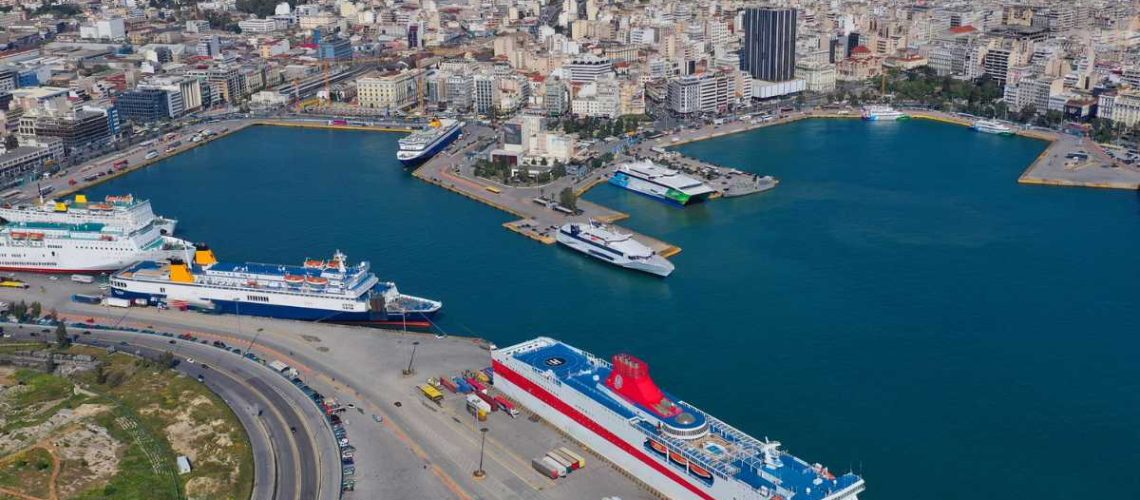
Greek ports are again central to global power strategies, highlighting their importance in regional influence and international trade dynamics. After more than a decade, during which Greece has been treated as a logistical trophy in a broader struggle for influence between China and the West, a new geopolitical-geoeconomic era seems to be on the horizon. Greece’s port system jewel, Piraeus, has been the flagship European conquest of Beijing’s Belt and Road Initiative (BRI). The port has been working for a while exactly as China intended: a gateway to Europe’s markets. It is also a symbol of how quickly the machines of global trade can shift when capital meets weak governments. At present, the latter narrative has changed dramatically, as rather than being a triumph of interconnected globalization, Greek ports have now become the contested territory of a world turning inward. Brussels, Washington, and a surprisingly assertive Athens are pushing back. A possible strategic rebalancing is in the works, stretching far beyond the Saronic Gulf. The latter could reshape the geopolitics of the Eastern Mediterranean, the future of China’s land-sea corridors, and ultimately result in a new commercial wiring of Europe itself.
The details of the ongoing process support this dramatic shift, with Greece unveiling a €680 million port modernization plan across the mainland, backed by another €180 million in European funds. These Brussels funds are targeting the upgrade of more than 30 island ports from Crete to the Aegean micro-hubs, all of which keep Greece functioning as a regional trade hub. All eyes are on Thessaloniki, where Pier 6 is being extended, 513 meters long, 306 meters wide, to be deepened to handle ultra-large container vessels. The underlying move is intended to support the ambition to transform the port into the primary trade gateway for Southeast Europe. In the future, the port should link the Aegean to the Balkan hinterland. Athens’ strategy is also clear in its overall statements, as it doesn’t speak of logistics, but of “strategic autonomy”, supply-chain security, and investment screening. While the used language is new, the intention is not.
At the same time, Washington, or definitely the Trump Administration, has noticed this.
The USA views Greek ports not merely as economic infrastructure but as potential nodes in the broader architecture of its Indo-Pacific and Middle Eastern strategies. It is also linked to the ongoing US-Chinese confrontation, or even to the US’s aggressive stance to remain a power in the European arena.
In quiet discussions between US and Greek officials, the main target is, however, how to curb Chinese access. Washington also wants to encourage US companies to enter port tenders, which need to be seen as a broader Western shift: the re-politicization of infrastructure. It is a different world we are playing in, one in which supply lines are no longer assumed to be safe, and ports become both critical and vulnerable. Analysis shows that American interest in Elefsina, Alexandroupolis, and even parts of Piraeus reflects a conviction that the Eastern Mediterranean is a frontline of strategic competition. In the East Med, Chinese influence must be diluted, and NATO’s southern flank must be reinforced.
At the same time, China’s overall power position in the region has weakened significantly, mainly because its assets have underperformed. The Piraeus port remains one of the fastest growing in Europe, but now it has to deal with a situation in which geopolitical patience has run out. At the same time, the Greek public mood has cooled, while Brussels has become much more assertive in its screening of investments. In sum, Athens has recalibrated its China policy away from the starry-eyed deals of the debt crisis era. Looking at the facts on the ground, it has become clear that COSCO’s ownership share in Piraeus, once watched with quiet tolerance, is now seen as an anomaly in Europe. All parties now recognize that the strategic risks of ceding core infrastructure to a rival system pose a threat to all. Athens could also take advantage of the West’s newfound desire to integrate Greece into alternatives like the India–Middle East–Europe Corridor (IMEC), which could offer major new options or opportunities, more interesting or rewarding than playing the Chinese card. For Washington and New Delhi, IMEC is the narrative successor to BRI. Even if IMEC will be slower, more complex, and less confident, it is politically palatable and anchored in alliances rather than dependencies.
The geopolitical windfall for Greece is apparent and should be taken on in new strategic moves.
While Greece was once treated as an afterthought in EU industrial strategy, Athens has now emerged as a player at the intersection of multiple corridors: the US-led IMEC plan; Europe’s renewed attention to the East Med; Egypt’s bid to reposition itself as a logistics and energy bridge; and the Gulf states’ search for stakes in Mediterranean infrastructure.
Taking into account Saudi Arabia’s moves on the global geopolitical stage, Athens will be wise to keep an eye on current discussions with the Kingdom, as the latter is showing interest in equity participation in Greek ports. The latter falls clearly within the moves made by other Gulf Arab states. While the Kingdom wants a Mediterranean gateway, Greece wants a capital untethered from Sino-Russian influence. At the same time, Washington wants a rail-sea alternative to China’s Eurasian routes. All these pieces fit perfectly.
Even though geopolitics is shaping headlines in Greece’s favor, the latter’s port evolution is not just about grand strategy. The practical business of global, regional, and even East Med trade is being rewired. As discussed earlier, American LNG now supplies more than 45% of Greece’s gas imports, making Alexandroupolis a regional gas hub for Bulgaria, Serbia, and North Macedonia. At the same time, energy markets are keeping an eye on Greece, as its new floating regasification units have nudged the country into the center of Southeast Europe’s energy security architecture. Over the past decade, East Med’s offshore gas reserves have been in focus, and a source of additional regional tensions, involving Cyprus, Israel, Turkey, Egypt, and European buyers. The latter situation, however, has elevated Greek ports as necessary staging points for naval logistics, subsea cable operations, and offshore energy supply chains. At the same time, European Commission’s quiet pressure to expand shore-power and electrification infrastructure is hitting and affecting Greece also. The EC moves have turned Greek ports into testbeds for green compliance. At present, Lavrio, Rafina, Kavala, and Corfu are preparing feasibility studies for cold ironing, targeting to electrify 23 ports by 2029. Also, for the Greek arena, shipowners should take note of the overall message: decarbonisation has moved from sermon to schedule.
Greek developments are unfolding against a broader geopolitical contest that stretches far beyond the Mediterranean basin. Over the last couple of years, China’s BRI has been bleeding political capital in Europe. Due to Italy’s withdrawal, increased tightening of EU investment controls, and the ongoing Chinese economic slowdown, the Pan-Eurasian narrative that brought COSCO to Piraeus in the first place has been substantially undercut. At the same time, Russia’s position, another pillar of the Shanghai grouping, is weakened. Moscow has lost strategic bandwidth in the Mediterranean, mainly caused by sanctions on Moscow due to its invasion of Ukraine and the lack of military successes overall. Even if you can clearly argue that Moscow’s influence in Greek logistics has never been strong, its diplomatic decline has totally removed it from the regional equation. Greece’s historical adversary, Turkey, however, is also sensing opportunity, now trying to position itself as the indispensable bridge between Asia and Europe. Ankara envisions becoming a key link in a China–Russia–Central Asia corridor running through Anatolia. For Greece, Europe, and NATO, it is good to understand that Ankara’s overtures to join the Shanghai Cooperation Organization fit this logic. A substantial Greek realignment with Washington will definitely limit Turkey’s ability to shape the Aegean’s logistical map.
For all parties involved, there is significant irony in place, not able to be missed. The infrastructure that was supposed to symbolize an open Eurasian commercial system will now be at the center of a new age of fragmentation.
Greece, the EU, and maritime or trade companies should realize that ports are no longer neutral spaces; they will be regarded as strategic assets through which military, digital, and commercial influence flows. In light of all the rhetoric about free trade or globalization, the competition over Greek ports is a clear sign that globalization’s hardware (cranes, terminals, pipelines, berths) is being re-nationalized.
All the above means that Beijing is losing its primacy. China is not losing Greece, but it will need to compete and operate in a different geopolitical, geo-economic, and military environment. China’s COSCO remains entrenched, but the political climate around it has hardened. From now on, Athens’ new foreign-investment screening regime will require disclosures that were previously ignored, while Brussels will be monitoring port governance with unprecedented zeal. For all outsiders, it should also be understood and assessed that the Greek pivot toward the US is not a temporary mood swing, but a structural reorientation driven by security concerns, energy dependencies, and the promise of deeper defence ties. While Piraeus is expected to remain under Chinese control for decades, its strategic value to Beijing is eroding. China will not deal with a situation in which its port becomes embedded in Western security frameworks and EU industrial policy. China’s fear at present is not expropriation; it is diminishing relevance. Still, the geopolitical and military situation elsewhere (Taiwan) could pose other threats in the future.
Western complacency should not be in place, as Greece’s port modernization drive is ambitious but still very fragmented. The €680 million investment package, though significant, is small compared with China’s earlier injections. Analysis should show that the island port upgrades, crucial for connectivity, will remain years from completion. The ongoing expansion of Thessaloniki holds the promise to reshape Balkan trade, but only if regional infrastructure improves. And the shift to green maritime operations imposes costs that Greece’s port authorities have yet to quantify fully.
Global and regional competition is accelerating simultaneously. Gulf sovereign funds are hunting for strategic European port assets. Ankara’s plan to become a maritime goods consolidation hub threatens Greek transit volumes, while Athens should recognize that Turkey has a strong relationship with several leading GCC players. As reported previously, Egypt continues to expand Port Said and the Suez Canal Economic Zone. The East Med Gas Forum provides a diplomatic forum, but little that resolves territorial disputes. In short, Greece’s ports are being asked to anchor in an increasingly crowded geopolitical space.
For Athens, there is a deeper question to be answered: “Can Athens do what few European countries have managed: turn geopolitical attention into coherent strategy?”.
It needs not only to support but also to take advantage of a rare convergence of American, European, and Gulf interests. Until now, Greece’s ability to manage these competing suitors has not been tested. It has to deal with the fact that Washington wants to insulate Greek ports from Chinese influence, Brussels wants regulatory discipline, while the Arab states wish to protect commercial stakes. At the same time, India looks at Mediterranean terminus options for IMEC. To juggle all of this, Greece has to set up a strategy that keeps it open enough to attract capital without falling into anyone’s orbit.
As a geopolitical analyst and historian, all looks as if Greece is repeating an old game: leveraging foreign interest to extract concessions without committing to a long-term geopolitical posture. While this could be done, the current global environment is less forgiving. Athens should realize that the great-power competition over ports is structural. Athens, its political parties, government, and economic sectors will have to choose more clearly where their infrastructure loyalties lie. And for the moment, the answer seems to lie is squarely with the West.
Beijing is and will be worried, as the risk is not losing Piraeus, but rather losing the narrative that the Mediterranean remains open to BRI. Washington also needs to realize that, to turn its strategic ambitions into actual investment, action is required from private US firms, which have thus far been very slow to act. Greece is currently looking at an unprecedented opportunity: to become the hinge between Europe, the Middle East, and the Indo-Pacific.
Whatever moves are being made, they will not upend the global order but will reshape the Mediterranean’s commercial geography. Piraeus has been for over a decade the symbol of China’s quiet ascendancy. At present, Piraeus symbolizes the West’s slow, belated attempt to reclaim strategic infrastructure. The Greek developments and focus on its ports are a microcosm of a more fragmented world — one in which trade routes are shaped as much by naval strategy and political distrust as by market logic.
Time will learn, but if Greece gets it right, it can become the indispensable crossroads of a new, multi-aligned Mediterranean. When things go wrong, however, Greece will become simply another arena in which great powers compete, invest, retreat, and reshape the map around it. In any case, the cranes of Piraeus and Thessaloniki are going to lift more than containers. The ports will lift the strategic weight of a world in transition, where ports are no longer gateways but battlegrounds.
