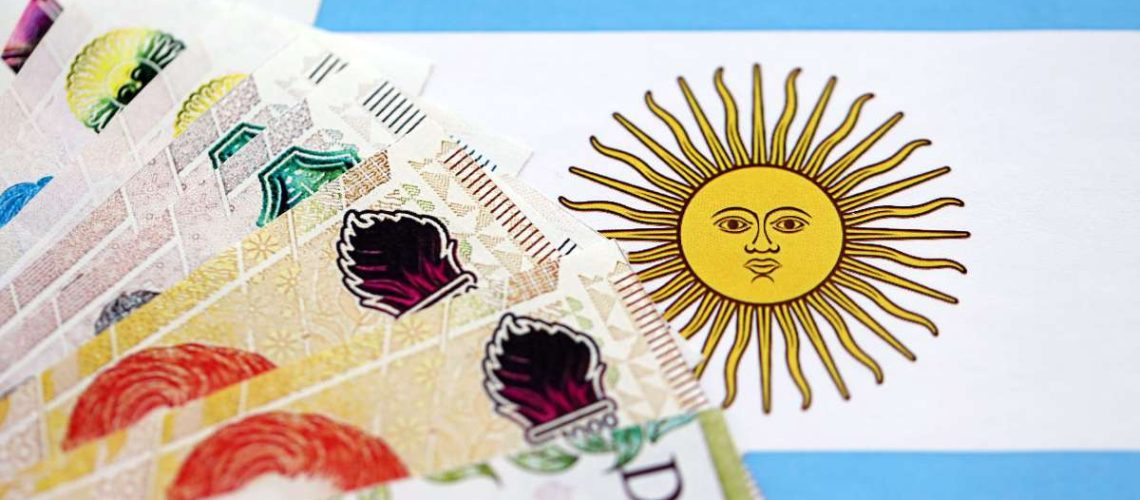

A few months ago, the President of Argentina, Javier Milei, appeared powerful and in total control, especially after his victory in the local elections in the city of Buenos Aires, which was reinforced by the consolidation of a decline in inflation and a surplus in the national budget. However, in a matter of weeks, everything changed.
The situation unraveled as suspicions of corruption began to emerge, followed by poor financial planning that led to an increase in interest rates, affecting domestic credit—the primary source of economic growth at the time. The Argentine peso started to depreciate, with the exchange rate reaching the upper limit of its band. Then came a defeat in the local elections of Buenos Aires Province, along with more corruption scandals. This was reflected in surveys, which showed a deterioration in confidence in the government, reaching the lowest level since the beginning of the administration. [1] [2] Just when it seemed the bad news would continue, announcements emerged that were a miracle for Milei.
U.S. Treasury Secretary Scott Bessent affirmed that the U.S. “stands ready to do what is needed within its mandate to support Argentina.” [3] It is still unclear how the agreement will unfold, but the U.S. has certainly given Milei a possibility to make a turnaround and regain lost confidence. Last week, it was confirmed that the U.S. intervened in Argentina’s foreign exchange market, an unprecedented event, sending a strong signal of support. However, this alone is not sufficient to erase fears and doubts, nor does it guarantee the success of the economic plan, much less the political one.
The recent challenges are still felt, and the upcoming national legislative elections on October 26 play an important role. Even with an unlikely landslide victory, it may not be enough to achieve a majority in Congress. A strong defeat would increase further doubts about the political stability of Milei’s administration.
Another encouraging news came from the U.S. with Sam Altman’s announcement of a project involving an investment of up to $25 billion in Argentine Patagonia [4] [5]. This would come under a special regime for large investors (called RIGI) and would position the country as a regional technological hub, boosting various projects in the area. It would be the first Stargate project in Latin America.
The RIGI accumulates investments totaling 15 billion dollars, primarily in mining and energy [6]. Despite the positive nature of these announcements, they take time to materialize and are not sufficient to lift the Argentine economy on its own in the short term. Even with low inflation and public accounts in order, the economic challenges for Milei remain strong. The most visible problem is becoming low wages and the decline in economic activity. The latest economic data suggest that the economy entered a recession during the third quarter [7]. Salaries in U.S. dollars have risen significantly since Milei took office, but not in purchasing power.
The main reflection that the Argentine economy is not experiencing a “miracle” is that it needed, in less than a year, funds from the IMF and from the U.S. If it needs help again, there may no longer be options available.
A continued lack of growth and stagnant income is a situation that cannot be sustained indefinitely without severely damaging expectations or the political image of the president. Milei’s great challenge now is to revive the economy while maintaining budget equilibrium and a restrictive monetary policy.
In a departure from the usual IMF-led approach, the U.S. Treasury became directly involved in Argentina. The intervention in the official exchange market to stabilize the peso, combined with a multi-billion-dollar swap line and forceful presidential endorsements, marks an extraordinary level of American involvement. This is not about providing money and having the IMF audit it later, but the U.S. did not give Milei a blank check. The U.S. wants to control the situation to ensure that the program goes well and to let Milei know that he is being monitored closely. Barry Bennett, an advisor to President Trump’s team, met with Milei’s advisers and various politicians to promote a broader alliance to support the government.
Why is Trump helping Argentina with more determination than back in 2018? Milei is probably the only ally of the U.S. in the region. There are also business opportunities for U.S. companies in key sectors like energy and mining. This could be a way to start regaining lost influence over China. Just like the U.S., China is an important trading partner for Argentina. Breaking free from this influence will not be easy. Moreover, there is the risk that if Milei fails, the next administration might have to return with its tail between its legs to ask for help from China, as the U.S. may no longer have the tools or the willingness to help.
Many things must go right in a country accustomed to things going wrong or very wrong.
At the White House, officials will closely monitor the October 26 election results, either breathing a sigh of relief or growing increasingly concerned.
Trump has taken on a predominant role in Argentina and, for the time being, has become the guarantor of Milei’s governability. The U.S. president stated that the aid will depend on the results of the elections. That comment was enough to raise doubts again, or to remind everyone how Trump operates. In that sense, the relationship with China is more stable and reliable, as it has been maintained over the last two decades, despite the changes in government in Argentina.
REFERENCES
[1] Universidad Torcuato Di Tella. “Informe de Confianza: Septiembre 2025.” September 2025. https://www.utdt.edu/download.php?fname=_175915642724797500.pdf
[2] Infobae. “La confianza en el gobierno cayó a su nivel más bajo desde el inicio del mandato, según el índice de la Universidad Di Tella.” September 29, 2025. https://www.infobae.com/politica/2025/09/29/la-confianza-en-el-gobierno-cayo-a-su-nivel-mas-bajo-desde-el-inicio-del-mandato-segun-el-indice-de-la-universidad-di-tella/
[3] Bessent, Scott. “The United States stands ready to support Argentina through these challenging times, ensuring stability for both nations. We will continue our strong partnership.” X, September 22, 2025. https://x.com/SecScottBessent/status/1970107351912075454
[4] OpenAI. “Argentina’s AI Opportunity.” Accessed October 12, 2025. https://openai.com/global-affairs/argentinas-ai-opportunity/
[5] AOL. “OpenAI Eying $25 Billion Data Center Project in Argentina.” Accessed October 13, 2025. https://www.aol.com/news/openai-eying-25-billion-data-133201708.html
[6] Dólar Hoy. “Minera McEwen Cooper entra al RIGI con inversión millonaria.” October 14, 2025. https://dolarhoy.com/negocios/minera-mcewen-cooper-entra-al-rigi-con-inversion-millonaria-20251014114535
[7] Clarín. “La economía cayó nuevamente este trimestre y el país ha entrado oficialmente en recesión.” October 14, 2025. https://www.clarin.com/economia/economia-trimestre-caida-entrado-oficialmente-recesion_0_SY3W7DYRg9.html
