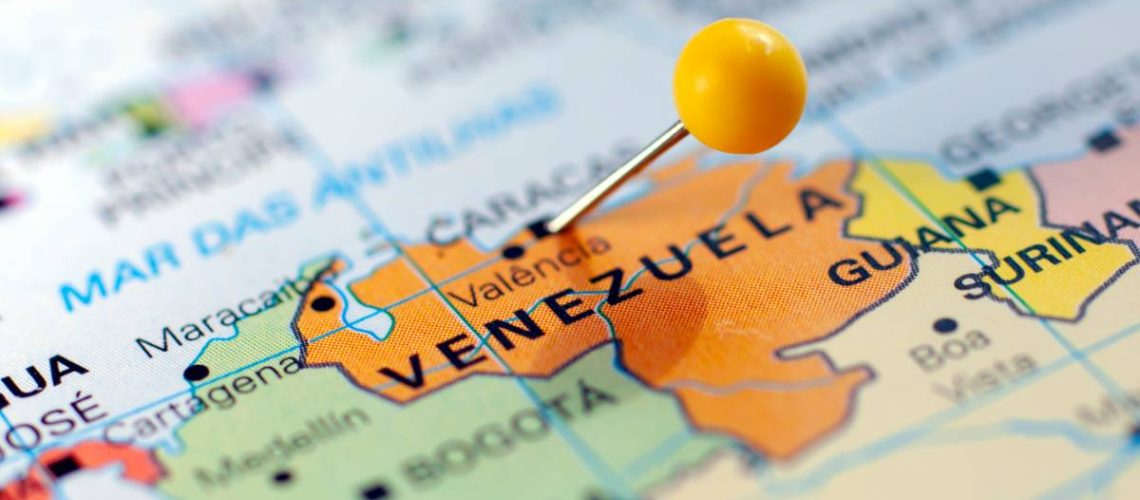

The reported capture of Venezuelan President Nicolás Maduro by United States forces on 3 January, following what US President Donald Trump described as a “large-scale strike,” confronts Europe with a legal and strategic dilemma that cannot be deferred through silence. The event is not merely another episode in Venezuela’s prolonged political crisis. It is a direct test of whether the legal constraints underpinning Europe’s foreign policy retain meaning when breached by an ally rather than an adversary.
At the core of the issue lies the prohibition on the use of force enshrined in Article 2(4) of the United Nations Charter. That prohibition admits only narrow exceptions: Security Council authorization or self-defense against an imminent armed attack. The public justifications offered by U.S. officials (centered on narcotics trafficking, criminal indictments, and the alleged illegitimacy of the Maduro government) do not clearly satisfy either condition. Reframing a military operation as law enforcement does not, in itself, supply a legal basis under international law.
“International law does not become optional because enforcement is politically convenient.”
The U.S. position rests on denying Maduro’s status as a legitimate head of state, thereby nullifying claims to sovereign immunity. This approach collapses long-standing distinctions between armed conflict, policing, and judicial process. Under customary international law, sitting heads of state enjoy personal immunity from arrest by foreign jurisdictions, save for arrest by their own state or pursuant to an international court mandate. Unilateral action by another state does not fall within those exceptions.
For Europe, this legal assessment is not abstract. The European Union has grounded its response to Russia’s invasion of Ukraine in precisely these principles: territorial sovereignty, non-intervention, and the inadmissibility of forceful regime change. Any perception that these norms are selectively applied undermines their credibility and invites counterarguments that law is merely an instrument of power.
Yet Europe’s predicament is real. Open condemnation risks exacerbating transatlantic tensions at a time when European security remains heavily dependent on U.S. military guarantees. Quiet acquiescence, however, carries longer-term costs. Silence signals that violations of international law are tolerable when committed by strategic partners, eroding the normative foundation on which Europe relies in other theaters.
Beyond law and security, the economic dimension is central. Venezuela holds the world’s largest proven oil reserves, much of it heavy crude historically supplied under preferential terms to China. Beijing has an estimated $19–20 billion in outstanding loans to Venezuela, largely structured through oil-for-loan arrangements. A U.S.-engineered leadership transition would almost certainly trigger efforts to repudiate these debts as illegitimate, imposing significant losses on Chinese state lenders.
From Washington’s perspective, this outcome may be strategic. Redirecting Venezuelan oil toward Western markets would ease supply constraints, support reconstruction financing, and weaken China’s energy position in the Western Hemisphere. For Europe, the implications are more complex. Increased Venezuelan output could modestly soften global oil prices, but at the cost of normalizing coercive access to strategic resources. That precedent matters for Europe’s own energy security calculations.
“Increased Venezuelan output could modestly soften global oil prices, but at the cost of normalizing coercive access to strategic resources.”
The technological dimension adds another layer. Modern energy production, logistics, and sanctions enforcement are increasingly driven by artificial intelligence systems that optimize supply chains, monitor compliance, and manage risk. Control over energy assets today translates into control over data streams, AI training environments, and industrial standards. A Venezuela realigned under U.S. dominance would likely integrate into Western technological ecosystems, further excluding China from both energy access and associated digital infrastructure.
This convergence of force, law, energy, and technology reflects a broader trend sometimes described as geolegal or legalnomics competition. Legal categories are no longer merely interpretive frameworks; they are operational tools. Jurisdiction is asserted through indictments, enforced through special operations, and finalized in domestic courts. The battlefield is no longer territorial alone, but procedural.
Supporters of the U.S. action point to the 1989 capture of Panamanian leader Manuel Noriega as precedent. The analogy is misleading. Panama involved a prolonged military intervention in a different normative environment, prior to the consolidation of post–Cold War legal constraints on the use of force. Treating it as a template risks repeating outcomes marked by instability rather than durable governance.
Europe must therefore decide not whether Maduro should remain in power, but whether the method of his removal is acceptable. Few in Europe dispute that Venezuela’s political system lacks democratic legitimacy. The question is whether illegitimacy justifies unilateral force absent multilateral authorization. If the answer is yes, then the legal arguments deployed against other violations of sovereignty become contingent rather than principled.
The EU still has policy space. It can articulate a position that condemns the use of force while reaffirming support for Venezuelan self-determination and accountability through lawful mechanisms. It can call for multilateral processes rather than unilateral enforcement. What it cannot credibly do is pretend that silence is neutrality.
This episode will not be remembered for its tactical execution, but for what it signals about the durability of legal restraint in an era of great power rivalry. Europe’s response will indicate whether international law remains a framework that constrains power, or merely a vocabulary invoked when convenient. That choice will shape Europe’s strategic credibility long after Venezuela fades from the headlines.
