
Strategy International highlights the recent opinion editorial published by our Junior Scholar (Gulf Affairs), Dr. Minas Lyristis, discussing the evolving dynamics and historical deadlocks of the conflict in the Middle East.
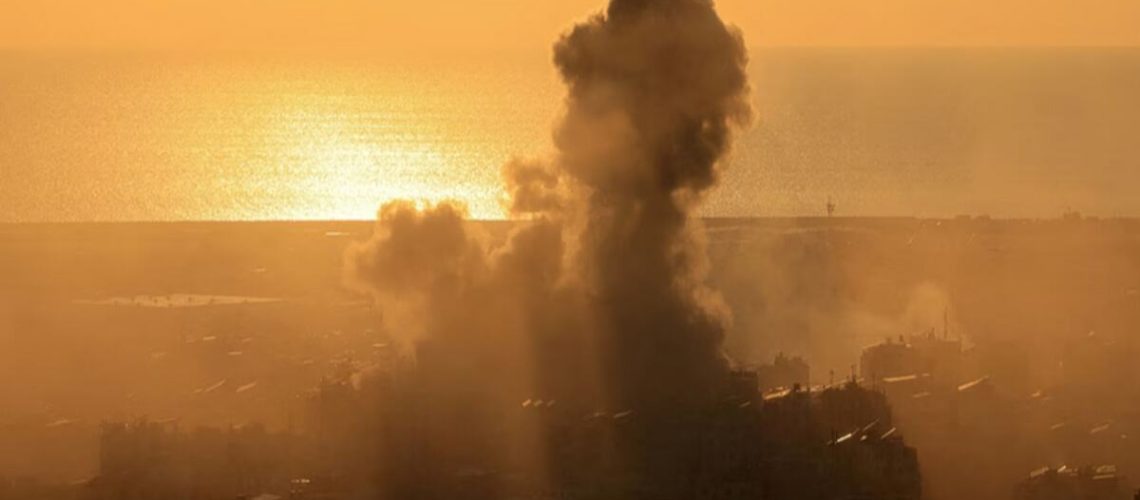
In this article, Dr. Lyristis examines the crisis in Lebanon, emphasizing that it transcends a mere border conflict and serves as a mirror for the broader, unresolved pathologies of the region. He pays particular attention to how the Palestinian issue and historical legacies continuously morph into new, expanded cycles of violence. His analysis emphasizes the importance of approaching the current crisis not only through the lens of immediate military developments, but also through a broader geopolitical and strategic framework.
The piece addresses the enduring nature of Middle Eastern crises, illustrating how internal state weaknesses, Lebanon’s confessional system, and exogenous rivalries intertwine, ensuring that conflicts like Gaza remain active elements in the region’s destabilizing equation.
- Dr. Lyristis assesses the historical and structural factors contributing to the intensification of the conflict, demonstrating why the region’s crises are never truly resolved but only transformed.
- The article underlines the significance of the current crisis for the balance of power, analyzing Hezbollah’s role as a crucial factor in the wider security architecture of the Middle East.
- Moving beyond short-term developments, Dr. Lyristis outlines how the Palestinian issue remains the permanent core of regional instability and the strategic uncertainties likely to shape the coming period.
The publication reflects Strategy International’s commitment to rigorous, evidence-based analysis of international and regional developments of strategic importance.
Read the full article here:
