

1. Situational Analysis: Cashlessness Meets Social Reality
A fully cashless system can discriminate technologically and exclude the poor or digitally marginalized, who rely on cash to manage daily bills and essentials. Research in Sweden documents how older people, refugees without bank accounts, and the digitally poor experience “cash bubbles” and social exclusion when basic services require digital payments only.
At the same time, cashless ecosystems can increase fee burdens and dependence on private infrastructures, benefiting higher‑income users while constraining those with limited access or credit. Recent scholarship links cashless transitions to widening inequality if public-policy guardrails are weak.
The emergence of cryptocurrencies and artificial intelligence (AI) has had a major effect on worldwide financial crime, allowing for increasingly complex fraud schemes. One example is “romance baiting” fraud, in which trafficked people, often under duress to commit crimes, use AI-generated faces to dupe victims into financial scams. This hybrid romance and investment fraud scam has become widespread in Southeast Asia, Africa, and Latin America. Criminal networks repurpose government intelligence tools to target these narratives, making it difficult for authorities to detect and intervene.
2. Lessons from Scandinavia: Resilience Before Replacement
Nordic countries pioneered cashless life: Sweden and Norway have among the world’s lowest cash-in-circulation shares, driven by mobile wallets (Swish, Vipps) and near‑ubiquitous digital acceptance.
In 2017, business researchers predicted that cash would be irrelevant in Sweden by March 2023, but it did not quite happen yet; recent policy shifts urging citizens to keep cash for emergencies reveal a critical truth: money’s evolution is not about absolute replacement but resilient integration. Cash remains a safeguard against systemic shocks, cyberattacks, and social exclusion, while digital systems deliver speed and convenience.
For example, the Ukraine-Russia war and fears of hybrid attacks (cyberattacks on financial systems and power grids) exposed vulnerabilities in fully digital payment systems. If electricity or internet fails, digital transactions stop. Sweden’s government distributed brochures titled “If Crisis or War Comes” advising citizens to keep at least one week’s worth of cash at home. Norway passed legislation requiring retailers to accept cash and even fines those who refuse.
The takeaway is not that Scandinavia is “returning to cash,” but that critical infrastructure must include cash as backup, even in nations at the frontier of digitalization.
“The lesson is clear: the future of money is integration, not replacement. Over the next 10–15 years, we will see a dual-layered financial ecosystem emerge—where conventional and digital money coexist to maximize convenience, continuity, and trust.”
3. Banking Implications and Cross-Border Challenges of Universal CBDCs
From a banking perspective, while digital currency tends to promote pure efficiency in exchange, it may also crowd out bank deposits, raise banks funding costs, and decrease investment. A universal Central Bank Digital Currency (CBDC) could reduce reliance on commercial banks, but if households shift deposits to CBDCs during stress, it may destabilize traditional banking. Broad accessibility adaptation ensures inclusion, but expanding access increases the attack surface for cyber threats. A universal CBDC simplifies domestic payments, but interoperability with other jurisdictions raises technical and legal challenges. Suppose the European Central Bank (ECB) issues a universal CBDC for the eurozone. If a business in Germany wants to pay a supplier in Japan using this CBDC, the transaction must comply with universal Japanese financial regulations, foreign exchange laws, and AML/CTF standards. Technical hurdles arise because Japan might have its own CBDC with different ledger architecture, settlement protocols, and privacy frameworks. Legal complexity arises: Which jurisdiction governs the transaction? How are disputes resolved? What about data protection laws like GDPR vs. Japan’s privacy rules?
4. Risk Landscape: Geopolitics, Cyber, and Fraud
Geopolitical tensions (e.g., Russia’s hybrid warfare risks) elevate the need for offline/backup payment modes. Governments in Sweden and Norway explicitly link national security to cash accessibility during disruptions to power or connectivity.
In parallel, migration to digital channels amplifies payment‑fraud exposure. Recent research shows how anomaly-detection models, risk optimization, and ML are essential to keep loss rates low at scale; AI trends further reshape fraud prevention, but also expand attack surfaces
5. Global Digital Payments: Scale, Adoption, and Fragmentation
Total digital payments (consumer transactions) are projected to reach US$ 24.28 tn in 2025 and US$ 38.82 tn by 2030 (CAGR ≈ 9.84%), combining Digital Commerce (US$ 7.53 tn to 13.51 tn) and Mobile POS Payments (US$ 16.75 tn to 25.31 tn).
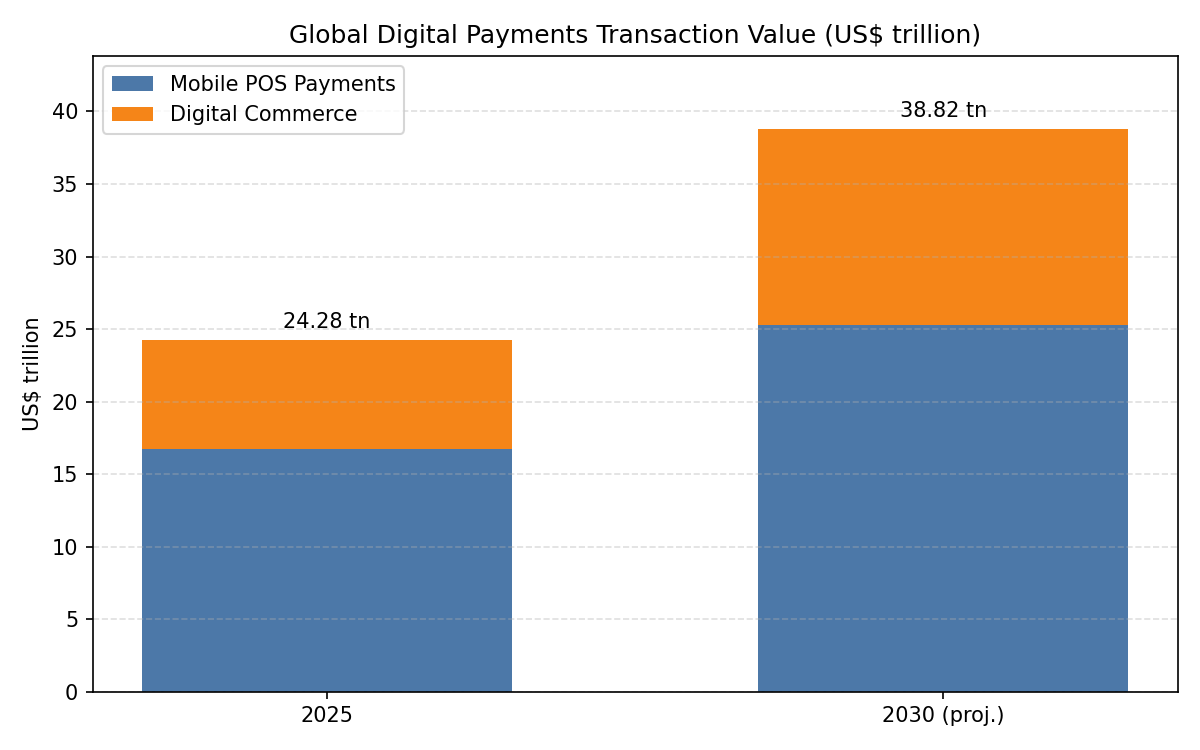
Figure 1 — Global Digital Payments Transaction Value (US$ tn) – Statista Digital Market Outlook
Mobile POS Payments are the largest component in 2025 (US$ 16.75 tn), reflecting widespread wallet/proximity-pay adoption at physical points of sale. China leads global totals (US$ 10.04 tn, 2025), highlighting regional concentration and interoperability challenges across jurisdictions. (IMF 2025)
6. From Digital Growth to Universal Digital Currency (CBDC): The Bridge
As digital payments scale, policymakers naturally explore universal digital currencies (CBDCs). The evidence suggests opportunity and trade‑offs:
- Scale & Adoption: With trillions flowing through digital channels, CBDCs can layer onto existing rails to improve reach and efficiency—if they match the UX of private wallets.
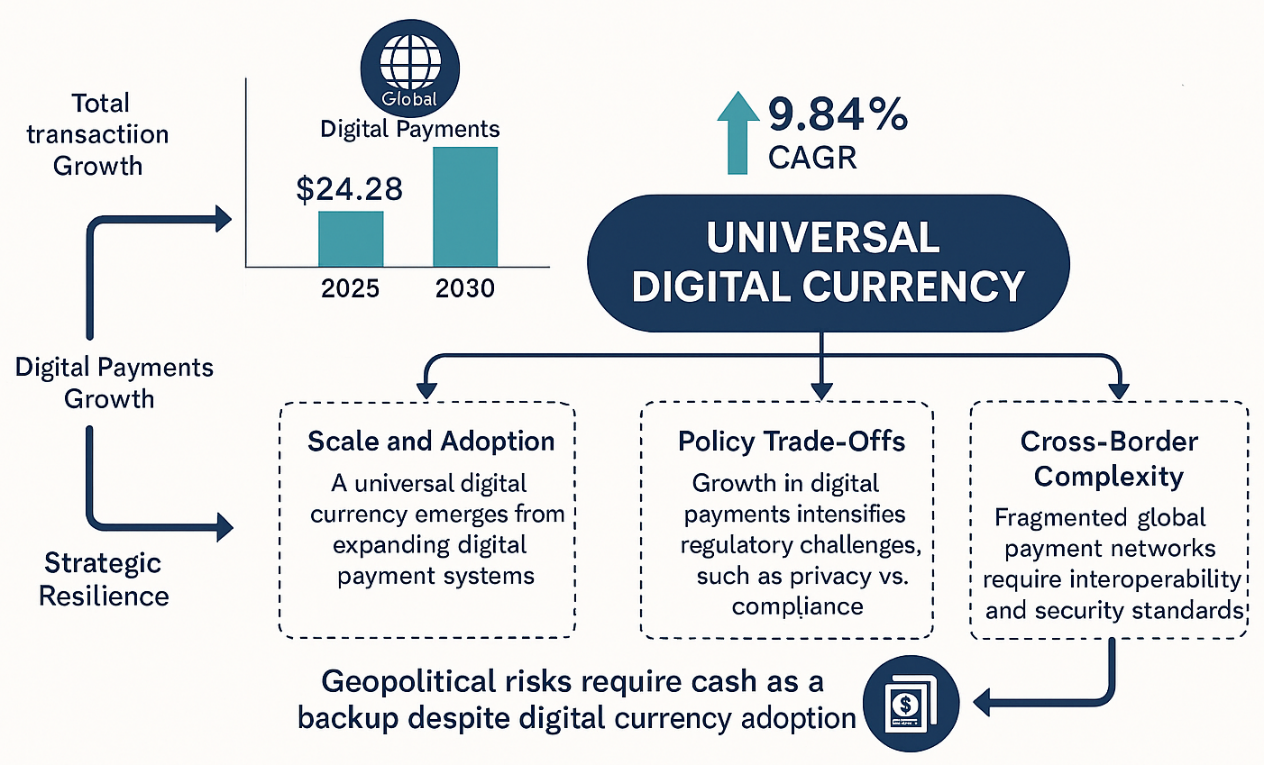
Figure 1: From Digital Growth to Universal Digital Currency
- Policy Trade‑offs:
- Financial stability vs. innovation (deposit flight risk, tiered remuneration).
- Privacy vs. Anti-Money Laundering (AML) / Counter-Terrorism Financing (CTF) compliance (controlled anonymity, identity thresholds).
- Accessibility vs. cybersecurity (offline features vs. attack surface).
- Cross-border complexity: Achieving interoperability between CBDCs and private payment networks introduces legal challenges (jurisdiction, data protection), technical hurdles (ledger architecture), and foreign exchange risks, but global standards remain in development.
6. Positioning: A Dual‑Layered Financial Ecosystem (10–15 Years horizon)
- Institutional Layer (Protection & Reversibility): Mobile payments and CBDCs for mainstream transactions, with dispute resolution, consumer protection, and robust identity safeguards.
- Decentralized Layer (Transparency & Autonomy): Cryptocurrencies and Decentralized Finance (DeFi) provide programmability and cryptographic security, requiring greater individual responsibility and advanced fraud-awareness skills.
- Fraud management will balance institutional controls (AML, data minimization, recourse) with user‑side security (wallet hygiene, phishing resistance, hardware isolation).
7. Conclusion: Integration, Not Replacement
The evidence tells a consistent story: digital payments will keep growing, but cash remains a strategic fallback—especially under crisis conditions. A universal digital currency, if designed with interoperability, inclusivity, security, and resilience, can reshape money without erasing it. The prudent outcome for the next decade is a dual‑layered ecosystem that integrates conventional and digital money to maximize convenience, continuity, and trust.
References
- Auer, R., Frost, J., Gambacorta, L., Monnet, C., Rice, T., & Shin, H. S. (2021).
Central bank digital currencies: motives, economic implications and the research frontier. BIS Working Papers, No. 976. https://www.bis.org/publ/work976.pdf - Brandl, B., Hengsbach, D., & Moreno, G. (2025). Small money, large profits: how the cashless revolution aggravates social inequality. Socio-Economic Review, 23(2), 735–757. https://doi.org/10.1093/ser/mwad071
- Evans, D. S., and Schmalensee, R. (2004) Paying with Plastic: The Digital Revolution in Buying and Borrowing, 2nd edn. Cambridge, MA: MIT Press.
- IMF Policy Paper (2025) – Central Bank Digital Currency: Further Navigating Challenges and Risks: evolving CBDC guidance https://www.elibrary.imf.org/view/journals/007/2025/041/007.2025.issue-041-en.pdf
- Judt, E., and Krueger, M. (2021) ‘The European Payments Initiative: The Next Big Thing in European Payments’, Journal of Payments Strategy & Systems, 15: 319–31.
- Kim-Kwang Raymond Choo (2024), Chapter 14 – Cryptocurrency and Virtual Currency: Corruption and Money Laundering/Terrorism Financing Risks?, Handbook of Digital Currency (Second Edition), Academic Press, Pages 259-290, https://www.sciencedirect.com/science/chapter/edited-volume/abs/pii/B9780323989732000125
- Krarup, T. (2019) ‘Between Competition and Centralization: The New Infrastructures of European Finance’, Economy and Society, 48: 107–26.
- Kutera, M. (2022). Cryptocurrencies as a subject of financial fraud. Cognitione Journal of Social Sciences and Economy, Fundacja Upowszechniająca Wiedzę i Naukę “Cognitione”. Retrieved from https://www.ceeol.com/search/article-detail?id=1084174
- Liu, Y., Tsyvinski, A., & Wu, X. (2019). Common risk factors in cryptocurrency. NBER Working Paper No. 25882. National Bureau of Economic Research. https://doi.org/10.3386/w25882
- McKinsey. (2025) ‘The 2025 McKinsey Global Payments Report’, https://www.mckinsey.com/industries/financial-services/our-insights/global-payments-report, accessed 5 December 2025.
- Vanini, P., Rossi, S., Zvizdic, E., & Domenig, T. (2023). Online payment fraud: from anomaly detection to risk management. Financial Innovation, Springer.
https://doi.org/10.1186/s40854-023-00470-w

