
The author of this article is Dr. Cyril Widdershoven
The last days the military confrontation between Lebanon’s Shi’a extremist military group Hezbollah, the leading power faction in the fractured country, and Israel is heating up. Last weekend’s Hezbollah’s missile attack on the Israeli Druze city of Majdal Shams on the Golan in the north of Israel, killing 12 children and wounding dozens more, has thrown a whole oil tanker of fuel on the already bushfire. At present the Israeli government and its military leadership is under extreme pressure not only to deal with the still ongoing Gaza conflict, where the Israeli army is fighting Islamic extremists of Hamas and others while trying to free more than 100 Israeli hostages, but also for once to put the Hezbollah, backed by Iran, threat to an end. While both sides don’t want to go into a full war at present, the signs are on red, as the continuing barrage of Hezbollah missiles and rockets into the north of Israel continues to spread havoc and insecurity. Hezbollah’s backers, Iran, but also Russia, Yemen’s Houthis, and Iraqi Shi’a militias, are stoking up the fire. In a reaction to the massacre in Majdal Shams, killing only Israeli Druze children, Tehran warned of an escalation, if Israel would take Hezbollah head-on. Western countries are calling for rational approaches, urging Israel not to take the war to Lebanon, or as some already indicate bomb Lebanon’s capital Beirut. The world’s superpowers are split, as the US is behind Israel, while Russia and China are backing Iran fully. European powers are split too, but still behind the Israelis even though cracks are emerging.
Leaving the foresight aside, history has learned that the Middle East is and will be a powder keg where rationality mostly prevails, but emotions can push the button. Rationally it is to be expected that Israel will act with full force, not only to deal with Hezbollah but also under the extreme pressure of Israelis living in the north of the country. Israel’s loyal Druze community is calling for blood, which can’t be ignored as the Druze are part of the Israeli military, now being hit at home. The main other issue playing up at present, not inside of Israel but in Lebanon and Syria is the position of the Druze powers at play. Until now Hezbollah has been supported (vocally) by the Lebanese Druze, especially Jumblatt. The latest attack on the Druze community in Israel could however be changing this dramatically, as they are not only family but blood. The same is at play for the Syrian Druze, already not fully backing Syria’s dictator Assad. Israel could be playing these cards to its advantage, as it has been doing in 1978 and 1982, when the Palestinian mini-state inside of Lebanon was removed, with the help of Lebanese anti-Palestinian forces, such as the Maronite Falange. The position of Hezbollah is omnipotent, as it holds larger military powers than the Lebanese Forces. However, the anti-Hezbollah front is growing, especially if Israel is going to directly hit military targets and infrastructure inside of the already battered and economically broke country.
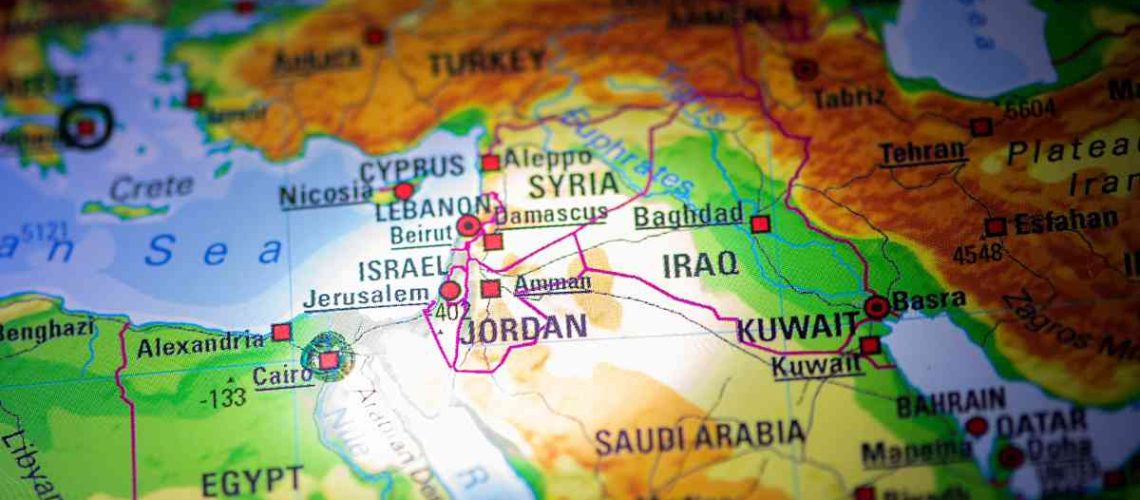
The looming conflict, or more rightly stated the full-scale war in the making, is not only threatening devastation to civil and military infrastructure, but will be for sure targeting the energy and critical infrastructure of the two countries, onshore and offshore. At the same time, a full-scale confrontation will not be limited to the geographical borders of Lebanon and Israel but could engulf actions on the Cypriot, Egyptian, and even East-Med Red Sea arena. Direct threats have been made already in the last years, as Hezbollah showed its capabilities to hit offshore energy infrastructure, such as offshore drilling operations, gas and oil production, and ports. Its current supporters in the region, include not only Iran but also potentially Syrian armed forces, Iraqi militias, and the well-known Houthi extremists in Yemen. For Israeli military operations, the involvement of Russia and China, inside of the Middle East but especially in Syria or Horn of Africa-Sudan, will need to be taken into account. It doesn’t seem far-fetched to expect Russian anti-aircraft missiles and radar installations to support Hezbollah’s actions against Israel’s air force. At the same time, the already decades-long cooperation and integration of Hezbollah (and others) forces with Iran-Russian military operations inside of Syria will be not out of danger.
Israel’s energy infrastructure is main target of a Hezbollah response to a full-scale war
For regional stability, the main question still will not how to deal with a Hezbollah-Israel war but the to be expected fall-out on the regional energy sectors, and potentially global markets.
In the next day’s energy experts, operators and investors, should be assessing deeply statements coming from leading Israeli military people and politicians. As Israel’s foreign minister Israel Katz stated “Israel is approaching the moment of an all-out war against Hezbollah and Lebanon”. He also stated that Hezbollah “crossed all red lines” in the strike, pledging that the terror group’s leader Hassan Nasrallah would be destroyed and that Lebanon would be severely damaged. While news from Israel remains diffuse, it is clear that the IDF is preparing major actions against Hezbollah. Defense Minister Yoav Gallant has held meetings with not only the IDF leadership but also Mossad and Shin Bet. IDF Chief of Staff Lt. Gen. Herzi Halevi stated to the press that the military is “greatly increasing its readiness for “the next stage in the fighting in the north,” while continuing to battle Hamas in Gaza. The general also reiterated that based on the type of rocket used, Falaq, holding a 53 kg warhead, the only culprit in all could be Hezbollah. Since the Hamas massacre on October 7, 2023, 24 Israeli civilians and 18 IDF soldiers have been killed by Hezbollah, but Israel has killed around 381 members of the terror organization. The point of no return is almost there, as not only right-wing Israeli political parties are calling for war with Hezbollah, but left-wing parties are behind a hard and swift reaction too.
On the Lebanese side, fear is also growing, as Hezbollah is putting the future of the country in danger. Until now, most Israeli actions against Hezbollah were focused on the south of Lebanon and the Bekaa Valey, both under Hezbollah control. A new military phase will include targets in and around Beirut and other areas in the country. Since 2006 Hezbollah has been preparing for a major military confrontation with Israel, building up a formidable missile and rocket arsenal of around 150,000 pieces, able to overwhelm Israel’s air defense systems. Russian and Iranian advisors will not be sitting still, as it would be devastating to Moscow to lose control in Lebanon and Syria. Jerusalem also will need to take into account that Hezbollah will be supported by the full “Axis of Resistance”, aka the total Iranian-backed extremist groups in the region. Most Lebanese are worried, as they are already fighting crisis after crisis, as the economy has collapsed, civil infrastructure is not working, the government is paralyzed and 80% of the current population is expected to be in poverty.
Since the start of June tensions between Hezbollah and Israel are rising. The IDF has already approved a full-scale attack plan for Southern Lebanon in June, while Hezbollah leader Hassan Nasrallah stated last week that the Islamic terrorist group is prepared to increase its attack to a wide range of Israeli towns. The main reason that until now no real military confrontation on the ground has been seen is the fear that a full-scale war will not only ignite Lebanon and Israel but the whole region. Israeli military advisors are also not yet clear about the end goal of a war with Hezbollah, especially while fighting already in Gaza. A two front military engagement will not only stretch the Israeli capabilities but especially will most probably weaken its until now very successful air defenses.
Dealing with Hamas, Houthis and sporadic Hezbollah missile attacks is on a different level than taking on Hezbollah frontally, risking the Lebanese extremist forces to engage its total 150,000 missile and rockets arsenal. A possible regional engagement (Iran, Iraq, Syria) could even be a possibility, which would make Israel vulnerable if no additional 3d party support is given. As already indicated before, Hezbollah’s weapons stockpile dwarfs Hamas’s capabilities, with also 100s of ballistic missiles able to reach Tel Aviv or other places in the south. The need to take on Hezbollah not only from the air, but also on the ground is clear to most. As shown in 1978-1982 or 2006, Lebanon’s battlefield is a quagmire, as it is still not clear who is going to support Hezbollah in its fight against Israel. To remove Hezbollah’s capabilities will be bloody, taking out 1000s of Shi’a extremists and its allies will not be without costs on the Israeli side.
The main threat is not Hezbollah’s human capabilities or its fighting capabilities on the ground, but its missiles. Israel’s overall technological advantage and military operational capabilities are out of the question. Hezbollah however could bring the war to Israel’s main hinterland, its cities, its military bases and its energy infrastructure.
In stark contrast to the October 7 2023 Hamas and Palestinian onslaught on Israel, which came as a surprise, a full-scale confrontation with Hezbollah and its allies has been prepared for years. Since the so-called Axis of Resistance or Axis of Evil was put in place by Iran and its Shi’a allies in Lebanon, Syria, Iraq, the Israeli Northern Command has been preparing a military reaction. Until now the decision to proceed has not been taken, but the Hezbollah massacre of Israeli Druze kids could be the precursor.
For Israel’s survival, and regional stability, a military confrontation with Hezbollah is not the only issue on its mind. Israel’s economy and military capabilities depend on access to energy, not only for the economy, or military operations, but also for the survival of civilians (water, power). Since the Hamas atrocities, Israel has been improving the overall defensive capabilities of its energy infrastructure (onshore) and the ongoing expansion of its offshore gas operations. After a very short period of shutting down part of the offshore gas production in October 2023, Israel has been actively looking to increase its natural gas production while targeting higher export volumes to Egypt. On June 26, the green light was given by Israeli energy minister Eli Cohen to a $500 million expansion project of the Leviathan offshore natural gas field. This very aggressive expansion project, which is partly needed to counter growing domestic energy demand but also to supply Egypt’s struggling energy sector was more gas, is however under severe threat. Hezbollah’s leader Nasrallah already stated just before to hit Israeli energy related targets. Hezbollah even released some drone pictures taken from Leviathan. Even that the Leviathan field is around 120 km offshore Haifa, the overall gas processing plants are clearly in reach of Hezbollah missiles, especially the ones holding sophisticated guidance systems. Of the around 12 billion cubic meters per year Leviathan production, 75% of its natural gas is sent to Egypt, the remaining to Jordan. The proposed expansion is targeting to increase production to 21BCM/year. Most of Israeli domestic gas demand is coming from the smaller Tamar gas field, further south offshore, but still in reach of Hezbollah missiles.
A Hezbollah-Israel military confrontation will be devastating to security and stability Egypt and Jordan.
When looking to the regional infrastructure, especially offshore East Med gas, the pivotal role of the Israeli operations and pipeline network become clear. It is not only supplying Egypt and Jordan with gas volumes, but in the coming years Cypriot offshore gas reserves will be connected to the Israeli-Egyptian network too. Even that the overall reserves of Israel are not very significant, but a loss will have a major impact on the market. Egypt and Jordan will feel the brunt without any doubt, even though the North African giant holds reserves 10-11 times larger than Israel. Cairo’s energy demand however is increasing substantially, while overall production is still not hitting expected targets. At present, Egypt has again become a net gas importer, relying on Israeli and other international supplies. A potential disruption to Israeli gas exports to Egypt and Jordan will be increasing the instability of both Arab countries for sure.
Not only Israel’s offshore gas production is under threat, but Hezbollah and others have already threatened Cyprus too. The ongoing military and economic cooperation between Israel and Cyprus has put Nicosia on the hitlist of extremists. At the same time, Western military operations against the Houthis in Yemen are being coordinated from the Greek Cypriot island too. This is in stark contrast to the occupied Cypriot side, currently called Turkish Cyprus, where Ankara is increasing its military presence and supporting Hamas, and its allies.
Egypt already suffers from blackouts this summer. If Israel ends offshore gas operations in the north to protect them from Hezbollah attacks, Egypt will be feeling the brunt. Israeli officials and experts all agree that if a war starts with Hezbollah, all gas exports to Egypt will stop. Cairo has become very reliant on Israeli gas supplies in the last few years. Short-term LNG import deals will not be able to fill the gap. The dependency on Israeli gas became clear just after the October 7 attacks of Hamas. Israel suspended the Tamar offshore gas production, forcing Egypt to start importing LNG in November 2023. In a war scenario with Hezbollah, Israel will for sure end production on its Leviathan field, while Tamar production will be 100% used for domestic Israeli demand.
According to Shaul Goldstein, CEO of Israeli utility NOGA, the situation could become dire. He stated bluntly, if no gas is available in Israel, the country will be inhabitable within 72 hours. While most attention at present is being given to Israel’s offshore gas operations, Hezbollah also is threatening the country’s power grid. NOGA indicated last month that “the country was unprepared for the lack of electricity should Hezbollah rockets hit power lines”. The ministry of energy is already looking at setting up so-called mini-grids, which are energy islands not able to be taken out in general. Ron Eifer, head of Israel’s energy ministry’s Sustainable Energy Division, already warned that “in the event of thousands of rockets falling, it’s clear there will be problems of blackouts”. At present, most grid infrastructure is above ground, likely to be a target of Hezbollah and its allies in future.
A potential full-scale war between Hezbollah and Israel will for sure be felt in Cyprus and Egypt, as the regional energy links and infrastructure could become targets. When looking at the overall East Med offshore gas picture, the fall-out of the Hezbollah-Israel crisis will have a major impact on the short to mid-term. Instability, military confrontation, and potentially a regional clash between the West and East, involving maybe even Turkey, Russia, Iran, and others (China), will not only destroy most of the ongoing energy cooperation strategies but will scare away most of the Western IOCs and other investors. If Hezbollah and its allies target offshore gas infrastructure, not only Israeli assets will be hit, but possibly Cyprus and Egypt too. Without a doubt, a regional confrontation, involving the full “Axis of Resistance (or Evil)” will push not only East Med to the brink, but will see action in the Red Sea-Suez Canal arena too. Western support for Israel will be a “battle cry” for most extremists and allies of Iran, Hamas and Hezbollah to attack regional pro-Israeli targets.
A full blockade of the East Med will have a larger global impact than currently the sporadic Houthi terrorist activities in the Red Sea and the Horn of Africa. A “regional conflict” will push back investment and logistics to other routes or regions. A lack of additional energy supplies to, especially Egypt, Jordan and Lebanon, will increase the volatility of these regimes, leaving room for additional extremism. Egypt will be a hotspot, as the current economic situation is already dire, unrest is growing due to high inflation, and increased fuel and food prices. A lack of power and water, as energy is already rationed could fuel further unrest in the largest Arab country. Jordan’s already debilitating situation, with a Bedouin monarchy ruling a Palestinian majority, will be a powder keg if not only Gaza is on fire but the north of Israel too.
While redlines are currently not anymore of any significance, as Hezbollah and Israel are on a war path, the fallout is still unpredictable. As both sides will be targeting critical infrastructure, instability will be high, pushing parties to take unforeseen steps. The future of the East Med as an oil and gas producing region is under severe threat, while global supply chains will be hit too. Hezbollah and its allies will be loosing, but the repercussions will be on a global scale. Israel’s energy infrastructure is playing a more pivotal role than its still small offshore gas reserves indicate. The security of Egypt, Jordan, and even Cyprus is at stake, while Lebanon and Israel could be facing disaster.
