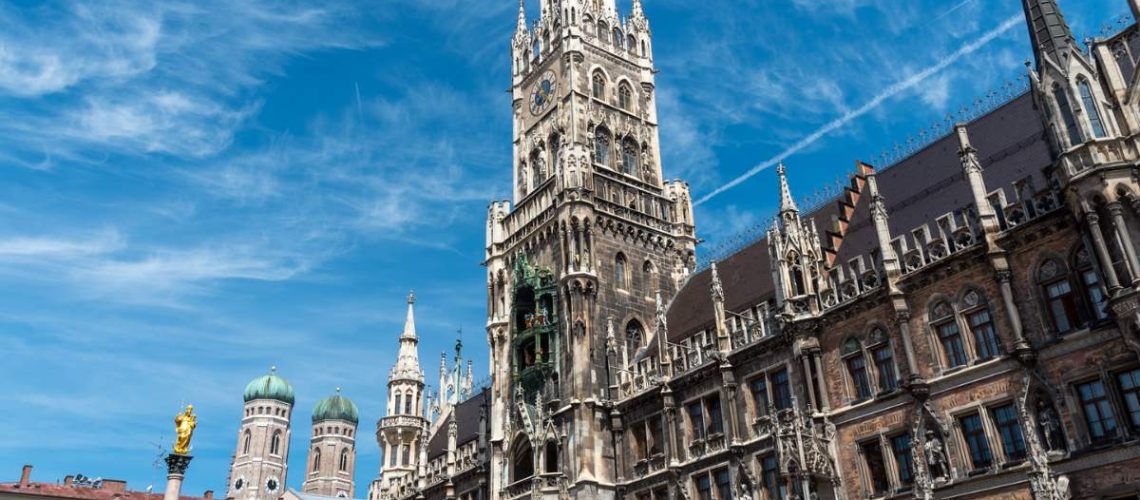

The upcoming edition of the Munich Security Conference (MSC) in Munish Germany, convenes at a moment when the international system is experiencing simultaneous stress across security, technology, climate, economic resilience and political legitimacy. More than a traditional security gathering, the MSC has evolved into a strategic coordination platform for governments, international organisations, defence and technology leaders, civil society and the research community. Strategy International are humbly honored to participate further to the invitation to attend at all levels high level talks, meetings and discussions.
“Security today is no longer defined by borders alone, but by interconnected risks that cut across geopolitics, technology, climate and economic resilience.”
The 2026 agenda reflects this transformation. It is built around the recognition that today’s risks are no longer isolated crises but interconnected systemic challenges that demand collective foresight, policy alignment and operational cooperation.
Strategic objectives
The first objective of the MSC agenda is to recalibrate international security thinking beyond conventional military balance. The conference is expected to focus on the interaction between geopolitical rivalry, regional conflicts and global structural transitions—particularly digital transformation, artificial intelligence, defence innovation, energy security and climate-related risks.
A central ambition of the agenda is to reinforce strategic coherence among allies and partners in an era of fragmentation. The MSC aims to provide a neutral yet influential setting where diverging threat perceptions—across Europe, the Middle East, Africa, the Indo-Pacific and the Americas—can be translated into shared priorities and coordinated responses.
“The challenge for the international community is not the absence of partnerships, but the absence of strategic alignment across regions and policy domains.”
A second objective concerns the resilience of international institutions and governance mechanisms. The conference will emphasise how multilateral frameworks can be adapted to respond more rapidly to hybrid threats, cyber operations, disinformation campaigns, economic coercion and grey-zone activities.
Equally important is the effort to embed sustainability and climate security into the core of defence and strategic planning. Environmental degradation, extreme weather, food insecurity and water stress are increasingly treated not as secondary policy issues, but as direct drivers of instability and conflict.
Finally, the MSC agenda aims to strengthen the strategic interface between public authorities, the private sector and research communities—especially in areas such as dual-use technologies, space security, cyber defence and critical infrastructure protection.
Expectations of the international community
For governments and international organisations, expectations are centred on practical policy convergence. Participants increasingly look to the MSC not simply for political statements, but for signals of concrete alignment—on defence industrial cooperation, regulatory frameworks for emerging technologies, and coordinated responses to regional crises.
European actors, viewed through the prism of Germany’s strategic and industrial priorities, are expected to emphasise defence readiness, technological sovereignty, supply-chain security and energy resilience. At the same time, the transatlantic dimension remains a defining pillar of the conference, particularly in relation to deterrence posture, military mobility and intelligence cooperation.
For partners from the Middle East and Africa, the agenda is expected to prioritise regional stabilisation, maritime security, energy and infrastructure protection, and the long-term governance implications of climate stress and demographic pressures.
From an Indo-Pacific and Global South perspective, expectations will focus on strategic autonomy, development–security linkages, economic resilience and the prevention of technology-driven dependency.
Across all regions, the international community expects the MSC to provide clarity on how major powers interpret the evolving global order—and whether meaningful cooperation remains feasible within an increasingly competitive strategic environment.
Processes and working formats
The MSC’s influence lies not only in its high-visibility plenary sessions but in its structured, multi-layered process of engagement. The 2026 agenda is designed around three complementary formats.
First, closed-door strategic dialogues among political and military leadership allow for candid exchanges on escalation risks, red lines and crisis-management mechanisms. These sessions remain crucial for building trust, testing policy options and clarifying intentions in an atmosphere shielded from immediate political pressure.
Second, thematic working sessions bring together policymakers, industry leaders, technology developers and analysts to explore specific domains—such as cyber defence, artificial intelligence governance, defence innovation, space security and climate-driven instability. These discussions are increasingly solution-oriented, moving beyond diagnosis towards implementation frameworks.
Third, open sessions and public panels connect the strategic debate with wider audiences, including media, civil society and the academic community. This openness enhances transparency and supports the MSC’s broader role in shaping international strategic discourse.
“Dialogue without follow-through is no longer sufficient; today’s security environment demands coordinated implementation and measurable outcomes.”
Side events, regional consultations and informal bilateral meetings continue to function as essential bridges between formal diplomacy and strategic networking.
Expected deliverables
The primary deliverable of the MSC is not a negotiated treaty or formal declaration. Its value lies in strategic alignment and agenda-setting.
A first deliverable is policy direction: shared narratives on the most pressing global risks and on the hierarchy of strategic priorities. These narratives frequently influence subsequent national strategies, alliance planning cycles and international policy initiatives.
A second deliverable is operational coordination. Through the conference process, actors identify opportunities for joint exercises, capability development, technology partnerships and coordinated diplomatic initiatives—particularly in areas such as maritime security, cyber resilience and defence innovation.
A third deliverable concerns knowledge production and strategic foresight. The MSC increasingly serves as a catalyst for analytical cooperation among think tanks, universities and policy research centres, generating forward-looking assessments and scenario-based planning tools for decision-makers.
Finally, the MSC provides a platform for building durable professional networks among policymakers, military planners, corporate leaders and researchers—networks that often become decisive during periods of crisis.
Strategic relevance in a transforming international system
The 2026 agenda reflects the growing recognition that security today is defined by interdependence. Military power, technological competitiveness, climate resilience, economic stability and societal cohesion are deeply intertwined.
The MSC therefore operates as a strategic laboratory for testing new models of cooperation in an international environment where traditional alliances coexist with flexible, issue-based coalitions. The conference offers a rare space where divergent regional perspectives can be confronted constructively, without the formal constraints of diplomatic negotiation.
At a time when global governance faces both political polarisation and institutional fatigue, the MSC’s role as a convening authority becomes increasingly valuable. It helps sustain dialogue across geopolitical divides while promoting practical cooperation in areas where common interests still clearly exist.
Strategy International participation
At this year’s Munich Security Conference, Strategy International (SI) and I, as its Director, will participate following an invitation by the MSC and its leadership.
We will attend and actively take part in both closed and open sessions, as well as high-level meetings and official and informal events. In parallel, we will conduct targeted high-level bilateral engagements with policymakers, institutional partners and industry stakeholders.
Strategy International looks forward through its participation the disseminating the key messages, insights and policy outcomes emerging from these discussions to the wider international community, while continuing to expand its research and policy engagement and making a positive, practical contribution to the rapidly changing international security landscape.

