
The European Green Deal, launched with sweeping ambition in December 2019, sought to reconstitute the foundations of the EU’s energy metabolism. More ambitious than a mere policy, it was a total re-design schema aiming to pivot the continent’s industrial base, fiscal planning, and strategic infrastructure toward carbon neutrality by 2050. The initiative now shows increasing signs of systemic fragility. Its timeline has compressed and its assumptions have not evolved to take account of changing realities. In short, its execution diverges from the adaptive logic required of complex, multi-layered energy systems. The result is not an orderly transition but a brittle drift.
The problem is in the policy architecture itself. In 2019, the European Investment Bank (EIB) adopted a new energy lending policy that eliminated support for nearly all hydrocarbon fuel infrastructure, including long-distance natural gas pipelines.[1] The decision, formally codified in 2020, excluded even co-financing arrangements that would have allowed projects in EU-neighboring states to connect. In parallel, the revised list of Projects of Common Interest (PCI), approved in 2022, removed all new hydrocarbon-based projects from eligibility, including those aimed at interconnecting East and Southeast Europe, despite their alignment with EU diversification goals.[2]
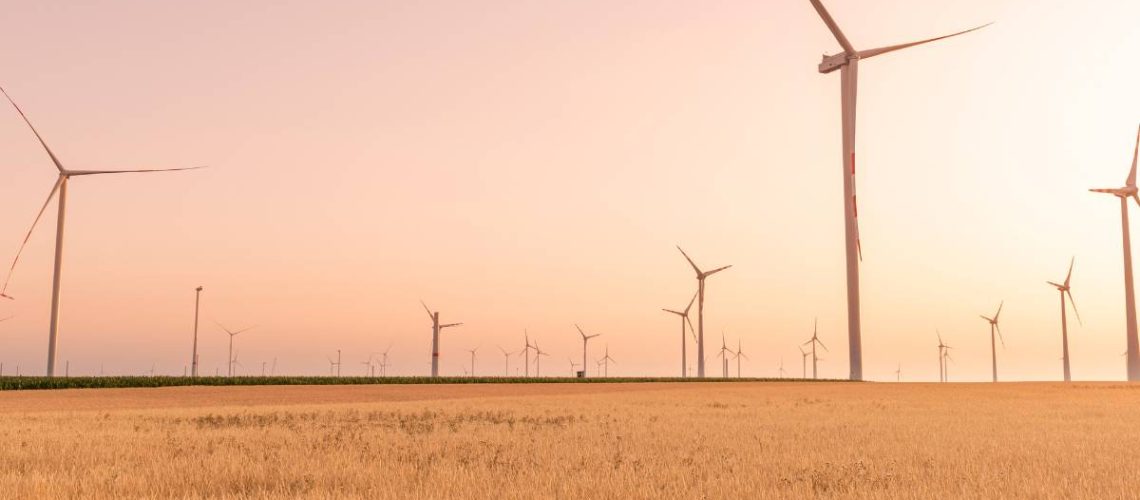
By 2023, Europe had enshrined these exclusions into taxonomies that governed access to green finance. This narrowed the field of viable investment candidates and shifted capital flows disproportionately toward wind and solar projects. Some of these, as in parts of Germany and northern Italy, now operate at capacity factors below 25 percent.[3]
The result has been predictable. In Germany, industrial electricity prices in 2023 averaged €250/Mwh, or nearly five times the long-term average from the early 2010s. Firms such as BASF and ArcelorMittal have either reduced domestic output or redirected investment to the U.S. and Asia. In France, EDF has had to request state support to buffer overextended commitments to deliver stable nuclear baseload. Meanwhile, the wider European grid has experienced six frequency deviation events in the last 24 months—double the number recorded between 2015 and 2020.[4]
This should not be unexpected. Systems like national energy networks—governed by tight coupling and high complexity—require redundancy, slack, and multiple feedback loops to remain stable under stress. Europe has eliminated many of these buffers. It withdrew from gas infrastructure investments before grid-level storage for renewables could reach viable scale. It phased out dispatchable coal generation while electrifying additional demand segments such as transportation and heating.[5]
Natural gas offers the most adaptable transitional capacity to stabilize Europe’s grid in real time, although only nuclear power can provide the structural baseload resilience needed to sustain deep decarbonization over the long term. Imports of liquefied natural gas (LNG) to Europe rose by over 60 percent in 2022, reaching 170 billion cubic meters (bcm), as Russian pipeline flows collapsed by two-thirds. Yet nearly all regasification expansion was conducted on an emergency basis. Germany had no active LNG terminal before 2022; now it has three, deployed under wartime-style urgency.[6]
These improvisations may absorb temporary shocks, but they cannot substitute for a coherent structural doctrine. Meanwhile, Asian LNG demand is returning to pre-pandemic levels. China imported over 70 bcm of LNG in 2023—up 12 percent from the year prior—and is signing 20-year offtake agreements with QatarEnergy and U.S. Gulf Coast exporters. Europe, by contrast, continues to operate on short-term procurement cycles, vulnerable to price volatility and political leverage.[7]
The issue here is temporal misalignment: Europe is imposing short-cycle planning on long-cycle infrastructure. Pipelines and power plants operate on 30–50-year asset schedules. Wind turbines degrade after 20 years, and solar panels after 25; batteries lose capacity within a decade.[8] Yet the financial-planning and legal frameworks treat all these limitations as ephemeral. As a result, capital rotates out of systemically stabilizing projects in favor of headline-compliant but weak substitutes.
Take transmission. Long-distance electricity corridors suffer from resistive losses of up to 7 percent per 1,000 kilometers. The proposed Black Sea submarine cable connecting Georgia to Romania—a €2.5 billion initiative partially funded by the EU—will deliver net energy into the Balkans at a cost four to five times that of comparable gas-based generation when line losses, maintenance, and volatility hedging are included. Yet gas transmission projects in Europe itself, such as the Ionian-Adriatic Pipeline, struggle to secure institutional backing.[9]
The systemic error is to treat the energy transition as a linear and teleological process.
In reality, it is a recursive, interlocking, non-equilibrium phenomenon. It requires phase decoupling: letting industrial, infrastructural, and behavioral subsystems evolve on differentiated time axes while preserving inter-operability. What Europe has done instead is impose synchronization, expecting that all domains (grid, finance, politics, consumer behavior) should move in lockstep toward a net-zero attractor state.
This fragility is compounded by Europe’s neglect of upstream dependencies. Green technologies are mineral-intensive. A single offshore wind turbine requires over 500 kilograms (kg) of neodymium and 300 kg of dysprosium: both of which are over 80 percent sourced from China. For a 1 gigawatt (GW) solar farm. approximately 4,000 tons of polysilicon are needed, much of it refined in Xinjiang under conditions subject to international criticism. Notwithstanding the Global Gateway Initiative for the Trans-Caspian International Trade Route (TITR, “Middle Corridor”), Europe has not secured strategic corridors for these materials, nor diversified sourcing with sufficient redundancy.[10]
If the Green Deal continues in its current trajectory, Europe will not become more independent; it will become, rather, more exposed. This is because energy is not just a sector: it is the backbone of political economy. Without a #resilient# substrate, no sovereignty agenda, industrial revival, or strategic autonomy can succeed.
What must be done?
1. The exclusion of gas infrastructure from PCI eligibility and EIB financing should be reversed under a doctrine of systemic risk mitigation.[11]
2. Europe must adopt an energy pluralism model—supporting nuclear, gas, and renewables—together, not in competition.[12]
3. Critical material supply chains must be internalized or secured through long-horizon infrastructure projects, including overland and maritime transit from Central Asia, sub-Saharan Africa, and South America.[13]
Finally, strategic time-awareness must be restored. Transitions do not happen by target year declarations. They emerge from intelligent synchronization of state capacity, market signals, and system feedback. Europe must recover this orchestration capability before the phase-space of viable adjustment closes.
The Green Deal, as currently constituted, enacts a kind of engineered scarcity. If it is not structurally corrected, then Europe’s future energy state will not be net-zero but net-fragile.
REFERENCES
[1]. European Investment Bank Group, EIB Group Climate Bank Roadmap 2021–2025 (Luxembourg: European Investment Bank, November 2020), https://www.eib.org/files/publications/thematic/eib_group_climate_bank_roadmap_en.pdf.
[2]. European Union, “Regulation (EU) 2022/869 of the European Parliament and of the Council of 30 May 2022 on guidelines for trans-European energy infrastructure, amending Regulations (EC) No 715/2009, (EU) 2019/942 and (EU) 2019/943 and Directives 2009/73/EC and (EU) 2019/944, and repealing Regulation (EU) No 347/2013,” PE/2/2022/REV/1, 30 May 2022, http://eur-lex.europa.eu/legal-content/EN/TXT/?uri=CELEX%3A32022R0869; Directorate-General for Financial Stability, Financial Services and Capital Markets Union, European Commission, “EU taxonomy for sustainable activities,” (Brussels: European Commission, n.d.), https://finance.ec.europa.eu/sustainable-finance/tools-and-standards/eu-taxonomy-sustainable-activities_en.
[3]. Benjamin Wehrmann, “Solar power in Germany – output, business & perspectives,” Clean Energy Wire, 28 May 2025, https://www.cleanenergywire.org/factsheets/solar-power-germany-output-business-perspectives.
[4]. Bundesnetzagentur für Elektrizität, Gas, Bundeskartellamt Telekommunikation, Post und Eisenbahnen, Monitoringbericht 2023 (Bonn: BNetzA, 29 November 2023), https://data.bundesnetzagentur.de/Bundesnetzagentur/SharedDocs/Mediathek/Monitoringberichte/MonitoringberichtEnergie2023.pdf; Natheniel Stone, “BASF Navigates Tariff Headwinds with Asian Expansion and Localization Strategies,” AInvest News, 2 May 2025, https://www.ainvest.com/news/basf-navigates-tariff-headwinds-asian-expansion-localization-strategies-2505/; Mark Segal, “ArcelorMittal Delays Green Steel Investments Due to Unfavorable Policy, Market Environments,” ESGtoday, 26 November 2024, https://www.esgtoday.com/arcelormittal-delays-green-steel-investments-due-to-unfavourable-policy-market-environments/.
[5]. K. Kaneliopoulos, “Scenario analysis of accelerated coal phase-out by 2030,” JRC Technical Reports (Luxembourg: European Union, 2018), https://publications.jrc.ec.europa.eu/repository/bitstream/JRC111438/acd_in_metis_final.pdf; Walburga Hemetsberger, Dries Acke, and Michael Schmela, European Market Outlook for Battery Storage 2025–2029 (Brussels: SolarPower Europe, 7 May 2025), https://www.solarpowereurope.org/insights/outlooks/european-market-outlook-for-battery-storage-2025-2029/detail; Martin Banks, “Electrification of heating and transport could bring ‘tangible benefits’ for Europe,” The Parliament Magazine, 21 April 2017, theparliamentmagazine.eu/news/article/electrification-of-heating-and-transport-could-bring-tangible-benefits-for-europe.
[6]. International Energy Agency, Gas Market Report, Q1-2023 (Paris: IEA, 2023), https://iea.blob.core.windows.net/assets/c6ca64dc-240d-4a7c-b327-e1799201b98f/GasMarketReportQ12023.pdf; Federal Ministry for Economic Affairs and Energy, “The Federal Ministry for Economic Affairs and Climate Action presents a report on the plans for floating and fixed LNG terminals and their capacities,” Press release, 3 March 2023, https://www.bmwk.de/Redaktion/EN/Pressemitteilungen/2023/03/20230303the-federal-ministry-for-economic-affairs-and-climate-action-presents-a-report-on-the-plans-for-floating-and-fixed-lng-terminals-and-their-capacities.html.
[7]. Shangyou Nie and Erica Downs, “Rising Production, Consumption Show China is Gaining Ground in Its Natural Gas Goals,” Energy Explained, 2 October 2024, https://www.energypolicy.columbia.edu/rising-production-consumption-show-china-is-gaining-ground-in-its-natural-gas-goals/; “China’s LNG imports increased 12.6 percent in 2023,” LNGPrime, 18 January 2024, https://lngprime.com/lng-terminals/chinas-lng-imports-increased-12-6-percent-in-2023/102619/; “European LNG imports to rise 25% in 2025, IEA forecasts,” Reuters, 11 April 2025, https://www.reuters.com/business/energy/european-lng-imports-rise-25-2025-iea-forecasts-2025-04-11/.
[8]. Giacomo Barbieri, Ana Sofia Vega, Jessica Gutierrez, Juliana Laserna, and Luis Mario Mateus, “Strategic capital investments in asset management: a value-based approach,” Journal of Quality in Maintenance Engineering 31:5 (2025), 1-22, https://doi.org/10.1108/JQME-11-2023-0104; “Wind Turbines and Solar Panels are Aging Prematurely,” Institute for Energy Research, 28 February 2024, https://www.instituteforenergyresearch.org/renewable/wind-turbines-and-solar-panels-are-aging-prematurely/.
[9]. Robert M. Cutler, “NATO Countries Seek to Import Electricity from the Caspian Sea Region,” Energy Security, 18 May 2024, https://natoassociation.ca/nato-countries-seek-to-import-electricity-from-the-caspian-sea-region/.
[10]. “The Importance of Critical Minerals in Renewable Energy,” Achilles Industry Insights, n.d., https://www.achilles.com/industry-insights/sourcing-critical-minerals-solar-wind-power-challenges-solutions/; Ben McWilliams, Simone Tagliapietra, and Cecilia Trasi, Bruegel Policy Brief, 8 February 2024, https://www.bruegel.org/sites/default/files/2025-05/europe-urgently-needs-a-common-strategy-on-russian-gas-10783_2.pdf; Robert M. Cutler, “How Azerbaijan Advances South Caucasus–Central Asian Integration Through the Middle Corridor,” Caucasus Strategic Perspectives 5:2 (Winter 2024), 19–30, https://cspjournal.az/uploads/files/3)%20Robert%20M_%20Cutler.pdf.
[11]. Ugnė Keliauskaitė, Simone Tagliapietra, and Georg Zachmann, “Europe urgently needs a common strategy on Russian gas,” Bruegel Analysis, 2 April 2025, https://www.bruegel.org/sites/default/files/2025-05/europe-urgently-needs-a-common-strategy-on-russian-gas-10783_2.pdf.
[12]. Malwina Qvist, “How Europe can make nuclear energy a key part of its clean industrial future,” Industry, Policy, Technology, 4 June 2025, https://www.catf.us/2025/06/how-europe-can-make-nuclear-energy-key-part-clean-industrial-future/; Benjamin Bajema, Richard W. Westerdale II, and Brian DaRin, “The Role of Natural Gas in European Energy Security and Decarbonization,” European Roundtable Summaries, April 2023, https://efifoundation.org/wp-content/uploads/sites/3/2023/08/Europe-Roundtable-Summary-OPERATIVE_FINAL_9-6-23.pdf.
[13]. Robert M. Cutler, “Trans-Caspian route reshaping Europe-Central Asia trade,” Asia Times, 11 August 2023, https://asiatimes.com/2023/08/trans-caspian-route-reshaping-europe-central-asia-trade/; Teresa Nogueira Pinto, “Accessing Africa’s critical raw materials,” GISReports, 7 February 2025, https://www.gisreportsonline.com/r/lobito-corridor/; Laszlo Arato. “The EU has also entered the race for South American minerals – just beating the US and China.” European Data Journalism Network, 11 March 2025, https://www.europeandatajournalism.eu/cp_data_news/the-eu-has-also-entered-the-race-for-south-american-minerals-just-beating-the-us-and-china/.

