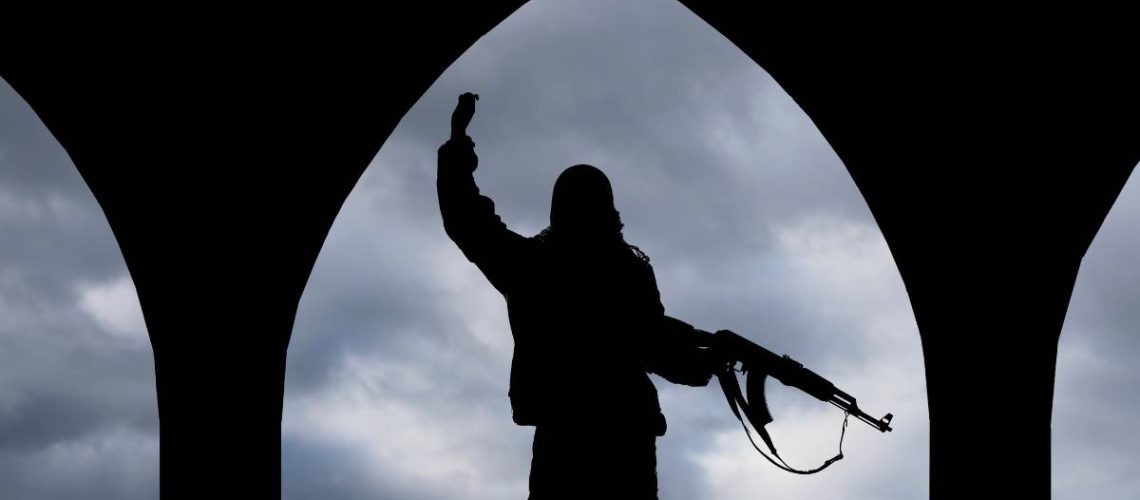

The impressive, regarding the hit and not the casualties, missile attack at Ben Gurion Tel Aviv’s International Airport on the 4th of May 2025, that prompt retaliatory airstrikes from Israel, brought to surface once again, the persisting and resilient Yemeni (para) military organization, who is being fighting for the last 30 years: The Houthis.
The Houthis ‘أنصار الله’ (ansar Allah), that translates ‘Partisans of God’ started as a paramilitary group that gradually gained control of the western and northern parts of Yemen, close to Saudi Arabia, including the capital Sanaa, where the 80% of the population resides. The group was formed in the 90’s, after the unification of North and South Yemen, by Hussein al-Houthi, a Zaydi[1] Shia Muslim cleric. From 2003 to 2009, Houthis engaged in six rebellions against the Sunni Muslim regime, under President Ali Abdullah Saleh, as they were protesting for the marginalization of the northern Yemen Zaydi sect.
The riots during Arab Spring in Yemen (2011), undermined Saleh’s rule and allow al-Qaeda in the Arabian Peninsula (AQAP)[2] to seize territory in the east of the country. Consequently, Saleh stepped down in a political transition plan, backed by Gulf states and Abd-Rabbu Mansour Hadi became ‘interim’ president to lead a national reconciliation plan and draft a more inclusive federal constitution. The following two years saw both AQAP’s massive attacks across the country and the Houthis seizure of the capital Sanaa (Sep 2014). Eventually, Yemeni government had to step down and Hadi was forced to share power[3]. The President tried to gain control and announced a new federal constitution (2015) that was opposed by both the Houthis and the ex-President, Saleh.
Both neighboring Sunni powers, Saudi Arabia and UAE, saw an imminent threat at their doorstep. An immediate (re)action was therefore required: Saudi Arabia led a coalition of mainly Sunni countries[4], that intervened (Operation ‘Decisive Storm’, Mar 2015) and one month later a follow on stabilization Operation ‘Renewal of Hope’[5] followed. The latter is still on, through different phases, fluctuating intensity and different compositions of the participants. Among the efforts to reach a permanent cease fire and restore the order in Yemen, one should mention the Stockholm[6] and the Riyadh[7] Agreements, with the latter still being the basis for negotiations, at least for the Saudi side.
As probably expected, the different national agendas within the coalition severely hampered its cohesion and therefore the main objective to restore the legal regime in Sanaa has not been met. At the same time, the Iranian destabilizing role in the Gulf region was rather successful, as the Supreme Leader Ayatollah Ali Khamenei publicly declared his regime’s support to the Houthis, in Aug 2019; thus, transforming the restoration of peace and order in Yemen, to a proxy war between Saudi Arabia and Iran[8].
On April 7, 2022, President Hadi transferred his powers to a Presidential Leadership Council (PLC), strongly supported, again, by Saudi Arabia. PLC’s task was to strengthen the anti-Houthi alliance; therefore, Saleh’s followers, warlords and tribal leaders, joint forces with the separatists of STC[9]. Moreover, the Council aimed to better coordinate the military kinetic action. As expected, the Houthis refused to negotiate with PLC (calling it a ‘Saudi puppet’) and insisted on direct talks with Riyad only. Therefore, although the internationally recognized Government of Yemen is the PLC, Saudi Arabia was dragged to direct negotiations with the Houthis, mediated by Oman.
When it comes to the Houthis’ relations with Iran, it is interesting to underline the lack of a strong religious bond, as Zaydism significantly differs from Iran’s Shia Islam, from a purely theological point of view. One could argue that Zaydis follow a moderate Shia version and therefore, they had peacefully coexisted with Sunnis in Yemen for years; however, the Houthis have adopted a much more radical rhetoric and analogous rebel posture. That was the catalyst for Tehran to fully incorporate the Houthis in the ‘axis of resistance’ against Israel and the broader West. That axis also includes Hamas (Gaza strip and Western Bank) and Hezbollah (Lebanon). In that context, Iran provides military support, mainly unmanned systems, ballistic missiles and training, in the same way that supports the other extremist groups.
With Iran’s backing, the Houthi movement gained impetus, and it was transformed from a local militia to a significant military organization, sufficiently funded, manned with experienced war fighters and equipped with advanced weapons, that were either smuggled in by Iran, or assembled in Yemen with the valuable assistance of Irani personnel.
The impressive attacks in Saudi Arabian’s soil (ARAMCO oil facilities[10] and Saudi airports[11]) with drones and ballistic missiles and the capture of South Korean vessels in the Red Sea (Nov 2019), were the main evidence that Houthis had emerged as a serious threat in the Middle East, that no one had the luxury to ignore.
In the aftermath of Oct 7, 2023[12], and the consequent invasion of Gaza by the Israeli Defence Forces (IDF), the Houthis initiated a series of attacks on commercial shipping in the Red and Arab Seas (Nov 2023). The fire in Yemen has been rekindled and intensified, and new stakeholders came into play, such as the EU. The significant damage to the world shipping companies, which had to alter – and therefore prolong – the journeys from East Asia to Europe, by using the Cape of Good Hope in South Africa instead of the Suez Canal, brought several economies, such as that of Egypt, to their knees. The enormous pressure on European political leadership led to the launching of EUNAVFOR ASPIDES in Feb 2024[13].
While ASPIDES maintains a defensive posture, as per its current mandate, parallel actions/ operations were undertaken to counter Houthis attacks, such as the Operation Prosperity Guardian (US-Led)[14], Operation Poseidon Archer (US – UK air strikes)[15] and the more recent Operation Rough Rider (US air strikes) which was concluded on the 7th of May 2025, after a deal that Oman has facilitated.
Another consequence of the prolonged civil war in Yemen, is the humanitarian crisis, the most severe at global scale.
In 2025, approximately 19.5 million people require humanitarian assistance and protection services, an increase from 18.2 million in 2024. Moreover, 4.5 million people have been internally displaced due to conflict and insecurity, while more than half of Yemen’s health facilities have been destroyed; thus, the access to essential healthcare is practically nonexistent. On top of that, Yemen has experienced several cholera outbreaks, with more than 800,000 suspected cases, in 2017 only[16].
Today the Houthi movement, under Abdul Malik al-Houthi’s (brother of Hussein al-Houthi) leadership, counts more than 200,000 fighters and affiliates[17]. Its arsenal includes ballistic missiles, such as Burkan-2H, a Scud-based missile with a range of 1,000 km and Quds Cruise Missiles with a range of 1,650 km. In addition, there are unmanned systems such as the Samad-3 (long-range UAV capable, carrying up to 18 kg of explosives at a range of 1,600 km), Shahed-136 (loitering munition UAV with a range of 2,000 km) and Khatif-1 and Khatif-2 short-range drones. Finally, Houthis use the Soviet P-22 and the Chinese C-201 anti-ship missiles, to attack the commercial shipping in the Red and Arab seas[18].
The further regional destabilizing role of Houthis is closely related to the Iranian stance. The defeat of Hamas in Gaza and Hezbollah in Lebanon, along with the developments in Syria, have severely hampered the ‘axis of resistance’, leaving the Houthis to carry the flag of the proxy conflicts alone. On the field, the prolonged air campaigns by the USA and UK, along with the missile attacks by Israel, although destroyed a significant portion of the Houthis infrastructure, did not seem to impact the group’s will to fight or its operational capability.
It’s interesting to observe whether the announced deal between the USA and the Houthis that terminated the intensive air campaign (May 7, 2025) will last. However, at political level, a potentially successful outcome of the Talks on a new ‘nuclear deal’ between Iran and the USA, will lead to the demarginalization of Tehran and consequently, to a further decrease of Iran’s military support to Houthis. To make things even worse for the Zaydi movement, the potential amelioration of Saudi – Iranian relations, should a nuclear agreement be implemented, will further isolate the militant group, which will then have to limit itself to the struggle for domestic power.
References
-
Zaydism emerged in the 8th century, founded by Zayd ibn Ali, grandson of Husayn ibn Ali, the third Shia Imam. The first Zaydi State in Yemen was established in 897 and the ‘Imamate of Yemen’ ruled until the North Yemen Civil War (1962). After that, the Sunni regime marginalized Zaydi population, as Saudi Arabia’s support promoted Salafi/Wahhabi influence.
Brandt, Marieke, ‘Tribes and Politics in Yemen: A History of the Houthi Conflict’, 2017. ↑
-
It is a Sunni group, officially established in Jan 2009. Its mission is to establish an Islamic emirate in the Arabian Peninsula and to attack Western installations. It claimed responsibility for the USS Cole bombing (Aden,2000) and the Charlie Hebdo massacre (Paris, 2015). It counts about 3,000 fighters.
ACLED (Armed Conflict Location & Event Data), ‘Al-Qaeda in the Arabian Peninsula’, Jan 31, 2024 https://acleddata.com/yemen-conflict-observatory/actor-profiles/al-qaeda-in-the-arabian-peninsula/?utm_source=chatgpt.com ↑
-
Al Jazeera, Mar 18, 2025: https://www.aljazeera.com/news/2024/1/12/who-are-yemens-houthis-a-basic-guide ↑
-
Operation ‘Decisive Storm’, 25th of March – 21st of April, 2015: A coalition of Saudi Arabia (Leader), UAE (major contributor but with reduced involvement after 2018), Kuwait, Qatar (withdrew in 2017), Bahrain, Egypt (limited naval and air support), Malaysia (withdrew in 2018), Morocco (withdrew in 2019), Jordan, Sudan (initially sent troops, later reduced involvement), Senegal (Withdraw in 2016). Later support by Pakistan (no direct combat role), USA (logistics & intelligence), UK (weapons & advisory), France (weapons & intelligence). BBC News, 12 May 2015 https://www.bbc.com/news/world-middle-east-32593749 ↑
-
Operation ‘Renewal of Hope’ 21st of April 2015 until today: focused on political processes and humanitarian aid delivery; however, it continued military strikes against Houthis. Al Arabiya News, 21 April 2015 (updated on 20 May 2020): https://english.alarabiya.net/News/middle-east/2015/04/21/Coalition-announces-Op-Restoration-of-Hope-in-Yemen-?utm_source=chatgpt.com ↑
-
Stockholm Agreement, Dec 13, 2018: Signed between the Houthis and President Hadi (UN-backed). The Security Council endorsed the Stockholm Agreement under resolution 2451 (2018). UN Peacemaker, Dec 13, 2018: https://peacemaker.un.org/en/node/9808 ↑
-
Riyad Agreement Nov 18, 2019: Signed between President Hadi (backed by Saudi Arabia) and the Southern Transitional Council – STC (backed by UAE). Still nominally in effect. Arab Center for Research and Policy Studies (ACRPS) Nov 18, 2019: https://arabcenterdc.org/resource/the-riyadh-agreement-on-yemen-arrangements-and-chances-of-success/ ↑
-
Ibrahim Jalal, Middle East Institute April 2, 2020: https://www.mei.edu/publications/five-years-has-arab-coalition-achieved-its-objectives-yemen?utm_source=chatgpt.com ↑
-
The Southern Transitional Council (STC) is a secular secessionist political and military organization, supported by the UAE. The STC remains the dominant force in southern Yemen.
Ahmed Al-Haj & Fatma Khaled, ‘Yemeni security forces deploy in Aden as anger simmers over lengthy power outages’, Associated Press, May 16, 2024
https://apnews.com/article/yemen-aden-electricity-protests-32c062a43fd4e0d22de62df35ccc3e4d ↑
-
ARAMCO installations at Abqaiq and Khurais were hit by drones causing a temporarily suspension of the oil and gas production. Deutsche Welle, Sep 19, 2019, https://www.dw.com/en/drone-attacks-set-saudi-aramco-oil-facilities-ablaze/a-50430391 ↑
-
The Houthis claimed responsibility for the drone attacks to three Saudi Arabian airports: Najran (May 21 and 23, 2019), Jizan (May 26, 2019) and Abha International airport (June 13, 2019). Caleb Weiss, FDD’s Long War Journal, June 14, 2019. https://www.longwarjournal.org/archives/2019/06/yemens-houthis-target-saudi-airports.php ↑
-
On Oct 7, 2023, Hamas launched the Operation ‘Al-Aqsa Flood’, killing more than 1200 people and taking 252 hostages. The Israeli Defence Forces (IDF) responded with the Operation ‘Iron Swords’, including extended airstrikes, followed by an invasion. The numbers of casualties vary depending on the source. However, it is estimated that over 52,000 Palestinians have been killed. Nearly all the Gaza inhabitants (approximately 2,3 million) were displaced and more than 92% of Gaza’s residential buildings have been destroyed. A comprehensive fact sheet was published by Al Jazeera on Oct 7, 2024 to mark one year from the Hamas invasion: https://www.aljazeera.com/news/2024/10/7/one-year-of-israels-war-on-gaza-a-simple-guide. ↑
-
Launched in Feb 2024, ASPIDES is an operation with a purely defensive posture. Its mission is mainly to escort merchant vessels from the Red Sea, via the Houthi controlled Bab-al-Mandaab Straits, to the Arab Sea and vice versa. Greece has the Operational and Tactical Control. ↑
-
Launched in Dec 2023, to protect the international shipping in the Red Sea. It is conducted by Combined Task Force (CTF) 153, part of the Combined Maritime Forces (CMF). ↑
-
Air strikes to degrade Houthis’ infrastructure and capabilities, that initiated in Jan 2024. ↑
-
UN OCHA Report, ‘Yemen Humanitarian Needs and Response Plan 2025’, January 15, 2025. ↑
-
RTE, Jan 12, 2024: https://www.rte.ie/news/world/2024/0112/1426193-houthi-weapons/?utm_source=chatgpt.com ↑
-
More details on Houthis’ arsenal at Global Defence News Army Recognition Group: https://armyrecognition.com/focus-analysis-conflicts/army/analysis-defense-and-security-industry/analysis-red-seas-arsenal-houtis-delivers-missiles-against-western-vessel?utm_source=chatgpt.com ↑

