
Introduction
The European Union (EU) is aggressively pursuing its decarbonization goals, with transportation identified as a key area for emission reductions. The sector accounts for nearly 25% of Europe’s total carbon emissions. To meet the EU’s target of cutting greenhouse gas emissions by 55% by 2030 and achieving climate neutrality by 2050, a transition towards battery electric vehicles (BEVs) is essential.
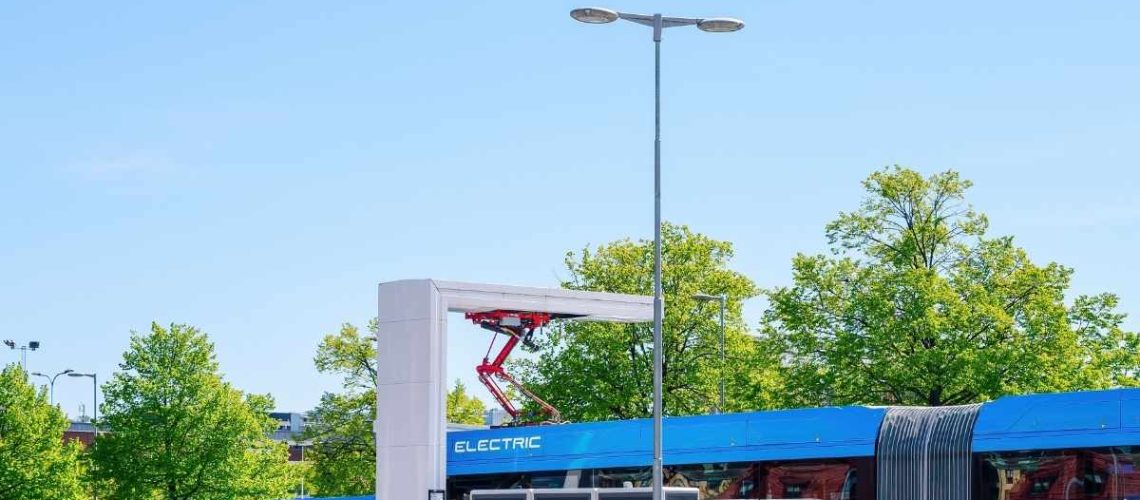
The shift towards BEVs in mass transportation, including electric buses, trucks, and trains, offers considerable environmental benefits, such as reduced emissions and lower noise pollution. However, the rapid adoption of these technologies has brought to the forefront significant challenges related to raw material availability and the management of battery waste, highlighting the need for a comprehensive, circular approach.
Battery Electric Vehicles in Mass Transportation
The adoption of BEVs for mass transportation is accelerating across Europe:
- Electric Buses: As of 2023, over 4,000 electric buses were operational across European cities, contributing to lower emissions and reduced urban noise pollution. Major urban centers like Amsterdam and Berlin have led the way in replacing conventional diesel buses with electric alternatives.
- Electric Trucks: The logistics industry is also transitioning towards electric trucks. Despite the current limited market share, adoption is expected to grow significantly by 2030 as battery technology improves. Leading manufacturers like Volvo and Daimler are introducing new models designed for urban deliveries.
- Battery-Powered Trains: Battery-electric trains are being explored as an alternative for non-electrified rail routes, offering a cleaner substitute for diesel-powered locomotives. Pilot projects in Germany and the UK have shown promising results, reducing both emissions and noise.
Raw Material Requirements for Battery Production
The production of lithium-ion batteries, which power BEVs, relies on several critical raw materials:
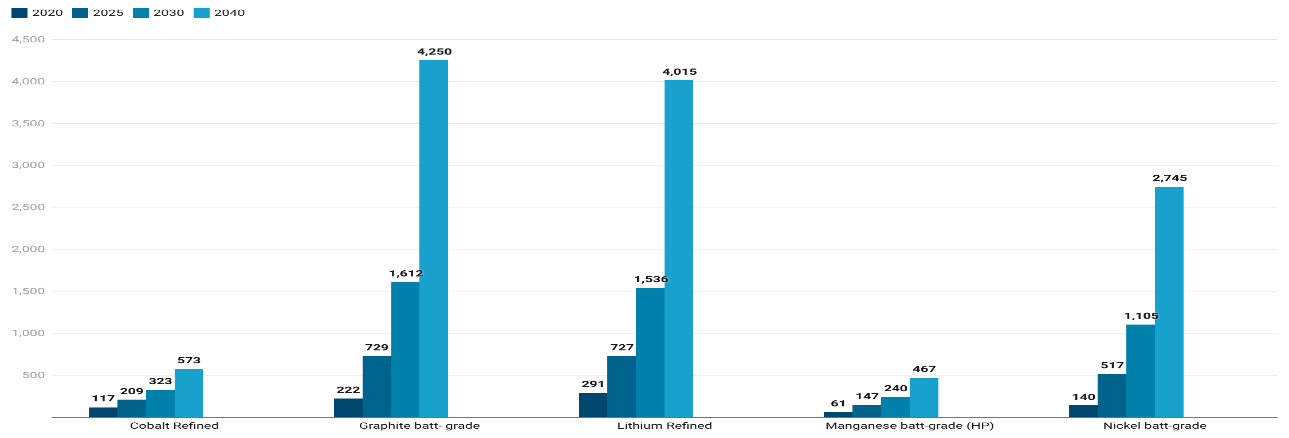
- Lithium: Demand for lithium is expected to increase by over 500% by 2030, driven by the surge in BEV adoption. Europe’s domestic lithium reserves are limited, leading to a heavy reliance on imports from Australia and Chile.
- Cobalt: Primarily sourced from the Democratic Republic of Congo, cobalt enhances battery stability. China processes a significant share of the world’s cobalt, underscoring the risks associated with concentrated supply chains.
- Nickel: Increasingly used for high-performance batteries, nickel improves energy density and vehicle range. Europe imports much of its nickel from Russia and Indonesia, both of which present geopolitical and environmental challenges.
- Graphite: Used as the anode material, natural graphite is predominantly produced and processed in China. Europe’s reliance on Chinese supplies poses a strategic risk, particularly in light of recent trade tensions.
Forecast of battery demand globally from processed raw materials (Source: JRC analysis.)
Dependence on China for Critical Raw Materials
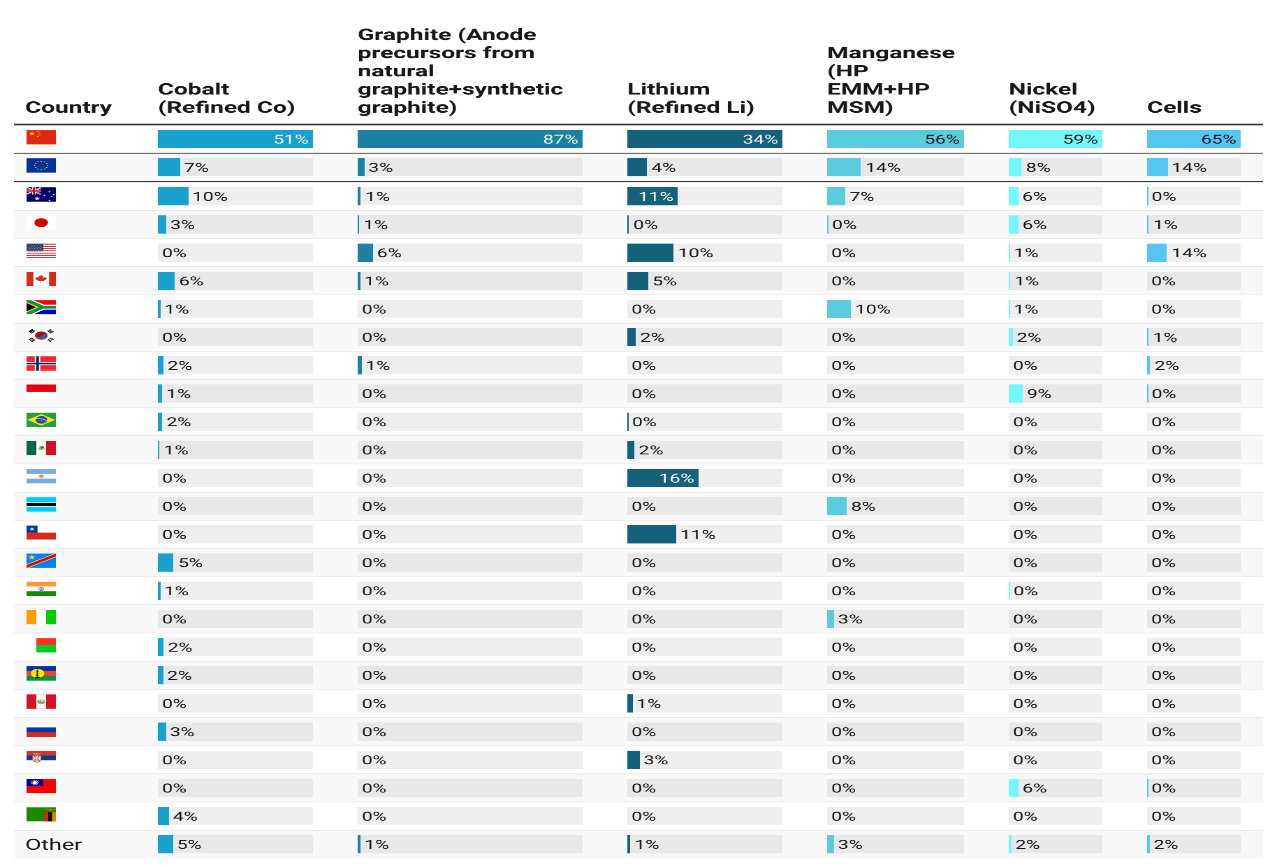
Europe’s transition to battery-powered transportation is constrained by its dependence on China for refining and processing key raw materials:
- Supply Chain Dominance: China processes around 65% of the world’s lithium, 70% of cobalt, and nearly all of graphite. This control gives China significant leverage over global supply chains, creating vulnerabilities for Europe’s battery industry.
- Strategic Initiatives: The EU has launched the Critical Raw Materials Act (CRMA) and the European Raw Materials Alliance (ERMA) to mitigate these risks, aiming to increase domestic production, enhance recycling, and secure diversified sources.
Projection of production capacity for battery-grade processed raw materials and cells in 2030 (Source: JRC analysis.)
With the rapid growth of BEVs, also, comes another challenge. Managing end-of-life batteries. Effective battery waste management is crucial for mitigating environmental impact and recovering valuable raw materials.
EU Battery Waste Legislation
- EU Battery Directive (2006/66/EC): This directive set initial targets for the collection and recycling of batteries. It mandates a 45% collection rate for portable batteries and requires recycling efficiency rates of at least 50% for lithium-ion batteries.
- New EU Battery Regulation (2023): The updated regulation introduces stricter requirements, including:
- Extended Producer Responsibility (EPR): Manufacturers must manage the entire lifecycle of their batteries, including collection and recycling.
- Mandatory Recycled Content: New batteries must contain a minimum percentage of recycled materials: 16% cobalt, 6% lithium, and 6% nickel by 2030, with the aim for 26% cobalt, 12% lithium, and 15% nickel by 2036 (Article 8, Paragraphs 2 & 3)
- Digital Battery Passport: This system tracks battery composition, origin, and recycling data, enhancing transparency and facilitating waste management.
Recycling Technologies
- Hydrometallurgical Recycling: Uses chemical processes to recover valuable metals, offering high recovery rates for materials like cobalt and nickel.
- Pyrometallurgical Recycling: Involves smelting to extract metals but has a higher carbon footprint and lower efficiency for lithium recovery.
- Direct Recycling: Preserves active battery materials without breaking them down into raw components, potentially offering higher recovery rates.
Challenges and Opportunities in Battery Management
Europe faces multiple obstacles in effectively managing battery waste. A major issue is the lack of sufficient infrastructure across many member states for the collection and recycling of end-of-life batteries. Additionally, the economic feasibility of recycling is hindered by the high costs and the diverse range of battery chemistries, which complicates the recovery process. Furthermore, the environmental impact of mining raw materials remains a significant concern, highlighting the urgent need for more sustainable and efficient recycling practices.
However, the push for better waste management also presents opportunities. As the technical and economic viability of EV battery recycling is steadily improving, driven by advances in technology, regulatory support, and increasing market demand for sustainable materials. While challenges remain—particularly in standardizing recycling processes and scaling operations—the potential benefits are significant. Effective recycling not only helps secure a stable supply of critical raw materials but also aligns with broader environmental and economic goals.
Conclusion
Europe’s shift towards battery-powered mass transportation is vital for meeting its climate objectives. However, the twin challenges of securing raw materials while balancing geopolitical & geoeconomic risks, along with managing end-of-life batteries require coordinated strategies. By investing in sustainable practices, fostering innovation in recycling technologies, and enhancing regulatory frameworks, Europe can build a resilient and sustainable transportation ecosystem that aligns with its decarbonization goals.
REFERENCES
[1] European Commission. “2030 climate targets.” Link.
[2] European Commission. “Critical Raw Materials Act.” Accessed November 2024. Link.
[3] International Energy Agency. “The Role of Critical Minerals in Clean Energy Transitions.” 2023 Report. Link.
[4] BloombergNEF. “Battery Market Outlook 2024.” Industry Report. Link.
[5] European Commission. “Analysis of supply chain challenges.” Link.
[6] EV Magazine. “E-Bus Mobility Set to Rise as Market Saw 53% Growth in 2023.” Link.
[7] European Parliament. “New EU Battery Regulation.” Link
[8] MIT Technology Review. “Battery recycling: 10 Breakthrough Technologies 2023.” Link

